Allocating Purchase Price in Logistics Company Mergers
Introduction to Allocating Purchase Price in Logistics Company Mergers
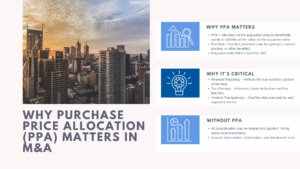
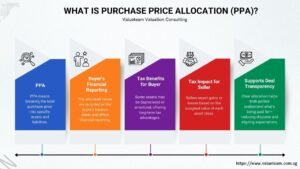
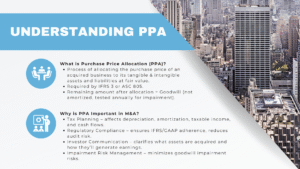
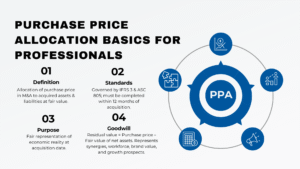
In the logistics industry, there has been a surge in mergers and acquisitions over the last couple of years as businesses amalgamate in an effort to enhance the strength of their supply chains, augment their service offerings, and enhance their last-mile services. In the situation where there is acquisition of a logistics company, the buyer is required to decide on the allocation by the purchase price to different tangible and intangible assets. This is referred to as Purchase Price Allocation (PPA) and should be prepared according to the IFRS 3 and has a direct effect on the post-deal financial reporting, further depreciation and amortisation costs, and the overall reporting of the business combination, which is why many acquirers rely on takeover business valuation services in Singapore to ensure accuracy and compliance.
This particular article is concerned with the effectiveness of logistics purchasers in their allocation of purchase price in transportation-oriented mergers. It describes the peculiar features of logistical assets, methods of their valuation, integration, and the implications of the IFRS. It is written to help finance departments, the valuation analysts, and the MM advisors adopt disciplined PPA practices in the supply chain and transportation industry.

1. PPA Landscape of Logistics Mergers.
1.1 The Asset Variety effective in Allocation.
The logistics companies have a sophisticated combination of operating resources, including line-haul trucks, warehouse facilities, and contract portfolios as well as technology platforms and route-optimization systems. To allocate the purchase price, it is important to have a clear knowledge about the nature and functionality of these assets as well as their fair value. Market comparables and cost methods can be used to value physical assets like vehicles and storage infrastructure whereas the intangible assets tend to require income methods.
This type of asset is what makes PPA in logistics significantly distinct compared to the retail, hospitality, or manufacturing. The acquirers have to consider operational dependencies, last-mile cost structures and the technology infrastructure behind the tracking, routing, and customer service operations.
1.2 Sector-Specific Intangibles.
The logistics industry is largely dependent on intangibles that are performance-sensitive such as customer relationships in long-term service contracts, software systems that aid route visibility, and service-level commitments that affect recurring revenues. These intangibles usually constitute an important part of the value allocated.
Such competitive factors as freight broker relations, port access rights, bonded warehouse permissions, and specialized tracking platforms are competitive in value. All these intangibles must be carefully valued since its economic value may be way beyond what the physical location of the company being acquired encompasses.
2. The use of Purchase Price Allocation in a Logistics Merger.
2.1 Determining Tangible and Intangible Assets.
The initial one will be to determine all assets that can be identified by the IFRS 3. The truck fleets, delivery vehicles, forklifts, and warehouse equipment are usually included in the logistics companies. They can also possess specialized equipment such as cold chain units or conveyor belts.
Intangible assets may comprise of trademarks, warehouse software, customer relations, warehouse contracts and franchise rights. Contract-based intangibles are of significance specifically since the logistics providers usually enter into long-term contracts with retailers, manufacturers, and online commerce companies. These agreements have a bearing on fair value and patterns of amortisation due to their stability.
2.2 Fair Value of Fleet and Warehouse Assets.
Market strategies are the most common methods used in the valuation of fleet assets based on similar sales of trucks, vans or forklifts with comparable mileage, age, and condition. In the case of warehouse properties, market rent and replacement cost analysis are usually used. These strategies make sure that the operational assets are indicative of the economics of the real estate and transport environment of the region.
Practically, the logistical centers of metropolitan or port-proximate cities or regions are more likely to be of higher fair value because of their strategic importance. Consequently, location-specific premiums tend to be part of tangible part of allocation.
3. Appreciating Intangible Assets that are exclusive to the Logistics Firms.
3.1 Logistics Contracts Customer Relations.
Most logistics providers rely on the long-term contracts of warehousing, distribution, and supply chain management. These relations are normally measured through multi-period excess earnings techniques as they are recurrent and are visible in terms of their contracts.
This is the point that industry knowledge is needed. Retention rates, historic churn, contract duration and reliability of service are factors that directly determine future economic returns. The allocators should also consider seasonality, particularly that of last-mile delivery service providers whose delivery cycles are at highest level to e-commerce customers.
3.2 Significance of Technological and Routing Optimization Systems.
The modern logistics firms have become very dependent on proprietary software, routing engine, parcel-tracking interfaces, warehouse automation platforms, and client portals. The solutions improve efficiency and customer satisfaction and minimize operating costs.
Technology intangibles are assessed through income or cost methods based on the maturity, scalability and competitive advantage. Their appraisal is fundamental to measuring fair-value as well as knowing the effects of amortisation after integrating with financial outcomes.
3.3 Context-Relevant Important Keywords in Industry.
Valuation analysts in most logistics M&A deals have to incorporate industry-based norms and reporting models. This includes compliance considerations such as logistics company purchase price allocation, particularly when transactions span multiple operating jurisdictions. Similarly, global acquirers often need to align local valuations with international disclosure expectations, making transportation IFRS reporting a critical layer of the post-deal accounting process. These factors shape both the valuation methods applied and the transparency of the financial statements after the acquisition.
4. Factors Influencing Allocation Outcomes
4.1 Market Trends and Operational Complexity
The fair value of logistics assets is affected by market factors that include fuel volatility, shortage of drivers and change in regulations. Supply chain breakdowns, as an example, are making warehousing capacity and transportation networks more strategically important, whereas well-developed carrier contracts become more valuable with a robust freight market.
The valuation is also affected by the complexity of operations. The companies that provide end-to-end services, i.e. freight forwarding to custom clearance and last-mile delivery, tend to have high intangible value as a number of sources of income are integrated.
4.2 Risk Assessment and Useful Life Assumptions.
Proper establishment of useful lives is crucial in the computation of amortisation charges. The usefulness of truck fleets may be lowered to short mileage intensity or warehouse automation systems may last ten years or more.
The intangible asset like the relationship with the customers is dependent on the duration of the contract, as well as the dependence on the services and switching costs. The barrier to switching is high and in this case prolonged usefulness is justified thus affecting the post acquisition profitability.
5. Introduction of PPA in Post-merger operations.
5.1 The allocation is to be communicated to the stakeholders as follows.
Effective PPA reporting involves effective communication with the management and the auditors and regulators. The logistics companies are highly likely to work with various transport authorities, ports, and various customs areas, which makes the reporting requirements more complex. The coordination will result in ensuring that the measured fair values supplement the strategic goals and comply with the expectations.
5.2 Tracking post-acquisition Adjustments.
After the initial assignment, the management should consider whether some further changes in fair value or contingent liabilities are necessary. The logistics activities change quickly, and reevaluations can be caused by fluctuations in the rate of fleet utilisation, changes in the quantity of contracts, or the leasing of warehousing.
Continuous monitoring helps to avoid any future impairment risks, as well as facilitate improved budgeting and prediction of physical and intangible property.
Conclusion
The process of allocating purchase price in the case of logistics companies merging is a very delicate circumstance influenced by the nature of assets, incorporation of technology, rules and regulations and long-term contracts. Appropriate valuation and fair-value evaluation helps the acquirers to reflect the economics of the business combination and uphold reporting discipline under IFRS. Properly implemented, PPA does not only improve transparency, but also the post-integration decision-making in the logistics value chain.