Advanced Fair Value Valuation under IFRS 13
Fair Value Measurement Techniques for PPA under IFRS 13
Learn Advanced Fair Value Valuation under IFRS 13
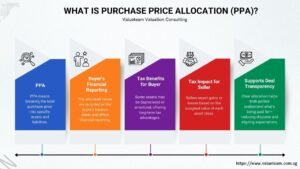
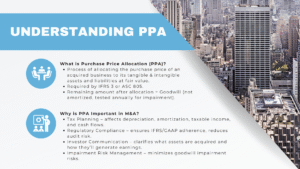
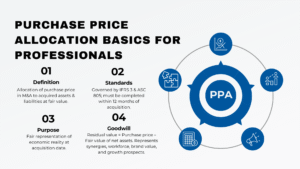
The decision on the extent to which the assets and liabilities of a company would have a value following an acquisition is not merely a financial undertaking in the context of mergers and acquisitions (M&A), but also a compliance issue. Purchase Price Allocation (PPA) involves the acquisition of identifiable assets and liabilities by acquirers, and assigning fair values to them. This process is anchored on International Financial Reporting Standard (IFRS) 13 that has detailed guidelines on how fair value measurement should be done. To the finance professionals, it is important to know how to implement the IFRS 13 principles in PPA to provide transparency and comparability and also to achieve audit requirements.
Discovering IFRS 13 Application in PPA.
The IFRS 13 sets fair value as the amount that can be obtained by selling the asset or giving to transfer a liability in a not chaotic transaction between market participants at the time of measuring the value. The standard offers one and uniform set of measurement of fair value in all applications of the IFRS in business combinations such as under IFRS 3.
Under the PPA, fair value measurement is the measure applied to the values attributed to the tangible assets, identifiable intangible assets and the liabilities of the company that are acquired. These valuations influence the future depreciation, amortization, and impairment and so accuracy is vital in the quality of financial reporting.
The Major Principles of Measuring Fair Value.
Market Participant Perspective.
Measuring fair value should not be related to the assumptions of the reporting entity, rather it should reflect what the market participants would have valued in the asset or liability. This school of thought makes the valuations objective and comparable between similar transactions.
Exit Price Concept
In IFRS 13, fair value is an exit price, the amount that an asset would fetch in case it were sold or that a liability would fetch in case it were transferred, instead of entry price or purchase cost. This change puts more focus on the market-based value that exists today as opposed to the historical cost or replacement value.
Highest and Best Use
In the case of non-financial assets, there is the fair value which involves the best and highest use in the eyes of a market participant. In this method analysts have to assess how much value an asset has when used and in its alternative use or when used together with other assets.
The Fair Value Hierarchy
A cornerstone of IFRS 13 is the fair value hierarchy levels under IFRS 13, which categorizes inputs into three levels based on observability and reliability:
- Level 1 Inputs: Quoted prices of active markets of the same assets or liabilities. Some examples relate to market traded securities or commodities.
- Level 2 inputs: These are visible inputs that are not quoted prices, which could be the interest rates, yield curves or even the prices of similar assets.
- Level 3 Inputs: The unobservable inputs are depended on the assumption or the model of the management where the observable data in the market is not available. Valuations on level 3 are typically used when it comes to the intangible assets or when it comes to investments in a company that is not publicly traded.
The hierarchy enhances transparency as it is demanding the companies to reveal the extent of inputs involved in arriving at fair value so that the investors and auditors can evaluate to what extent an estimation has been made.
The Application of Fair Value Measurement in PPA.
Under business combination, fair value is measured on a large number of assets and liabilities such as tangible assets, intangible assets, and contingent liabilities. It is aimed at estimating what each item would be at, in an orderly transaction at the date of acquisition.
Tangible Assets
The market approach or cost approach is generally used to value property, plant and equipment. Depreciated replacement cost method is quite common where the special equipment is involved and active market prices are not available. It is a technique that determines the cost of replacing an asset by a new one, which is adjusted to physical deterioration and obsolescence.
Intangible Assets
The intangible assets, including trademarks, technology as well as customer relationship, may need more multifaceted valuations. The market data of such assets is not usually available, therefore Level 3 inputs prevail in this analysis. Such methodologies as multi-period excess earnings method (MPEEM) or relief-from-royalty method can be used to estimate present value of future cash flows that can be attributed to such assets.
Debts and Contingent Consideration.
Measuring of assumed liabilities, including warranty obligations or contingent consideration (earnouts), are also measured using fair value. The valuation usually entails probability-weighted cash flow situations that have been discounted at a risk-premiated discount rate.
Common Valuation Approaches under IFRS 13
IFRS 13 recognizes three primary valuation approaches that can be applied depending on the asset type and available data. These valuation techniques used in purchase price allocation ensure that fair values reflect market-based evidence rather than internal estimates.
Market Approach
The market approach obtains value by making a comparison of the subject asset with similar or identical assets as the one that are sold in the market or are in a position to be sold. As an illustration, real estate or machinery can be measured by making reference to similar sales in the recent past. This becomes difficult when similar transactions are few especially on intangible assets.
Income Approach
This approach uses the fair value estimated on the present value of future expected economic benefits. It is highly applicable in intangible property and businesses which produce a predictable cash flow. The key variants include:
- Discounted Cash Flow (DCF): This involves estimations of future cash flows of the project and discounts them at a relevant rate based on market risk.
- Multi-Period Excess Earnings Method (MPEEM): This method assigns earnings to intangible assets such as customer relationship in a specific way.
- Relief-from-Royalty Method Values trademarks or brands on the basis of hypothetical royalty savings the company would if it owned, other than licensed the asset.
Cost Approach
The cost method determines the value to be used in estimating the cost of replacing the capacity of the service of an asset. It is especially appropriate in the case of specialised physical assets or new-technology when there is little income or market information. Physical deterioration, functional inefficiencies and economic obsolescence are adjusted.
Difficulties in the Implementation of IFRS 13 to PPA.
Limited Market Data
In special intangible assets, there are no observable prices in the market. The fact that finance professionals need to base their work on unobservable inputs makes the process of valuation more subjective and complicated.
The calculation of Appropriate Discount Rates.
It is important to use the right discount rate when using the income approach. It should be based on the risk profile of the asset, the market expectations, and the cost of capital that may differ significantly in terms of industry and location.
Stability and Reporting.
Valuation assumptions, methods and hierarchy levels are expected to be well documented by auditors and regulators. To eliminate audit challenges, there should be consistency between assets and reporting periods.
Best Practices in Finance Professionals.
- Begin Earlier Dealing Process: Incorporate Fair value issues in due diligence to foresee data needs and valuation issues.
- Apply a Variety of Methods: Compare: Triangulate the results of various valuation approaches to increase the reliability.
- Check Key Assumptions: Check all possible market data against key assumptions, which are the discount rates, growth rates, and royalty rates.
- Proper Disclosure: Report clearly hierarchy levels, valuation methods as well as sensitivity analysis in financial statements.
- Hire Independent Valuation Experts: Independence is offered by external auditors and assists in enhancing audit defensibility.
These are best practices that are able to not only increase compliance, but also guarantee that PPA outcomes offer strategic data on value creation of deals.
The Interrelation between IFRS 13 and IFRS 3.
Although the accounting of business combination is regulated by the IFRS 3, the measurement framework of giving fair values is regulated by the IFRS 13. They collectively help in making sure that the balance sheet of the acquirer is a true representation of the economic reality of the acquired entity. Practically IFRS 13 assists in deciding the proportion of purchase price to be allocated to intangible and tangible assets as opposed to goodwill.
To illustrate, in valuing customer contracts, IFRS 13 helps set the assumptions on how to estimate the fair value on the basis of the market participants whereas IFRS 3 concerns the way this value ought to be recognized and amortized. This play highlights the necessity of proficiency of both standards by the professionals.
Conclusion
Micropia purchase price allocation and financial reporting are based on fair value measurement under the IFRS. Using the hierarchy, principles and valuation techniques of IFRS 13, the finance people can make sure that their valuations are market based, transparent and defensible. Having acquired these techniques would not only facilitate regulatory compliance but also improve the quality of financial information obtained out of M&A deals. In the end, a strict method of fair value measurement would enhance investor confidence and give a better perspective of the real economic value of the creation by acquisitions.