How to Choose the Right PPA Valuation Expert
Once a company has been acquired, it is not the time to stop working at the signing table. Actually, the most technically difficult operation commences right away: to distribute the purchase price among the identifiable assets and liabilities of the acquired entity. The practice, referred to as purchase price allocation, or PPA, lies at the confluence of the financial reporting, tax strategy, and corporate governance. It takes an unusual blend of accounting skills, valuation prowess and experience within the industry. But numerous organisations, especially during their first or second merger, do not realise how important the selection of the PPA valuation experts can be to the entire outcome.
This information is practically as well as professionally useful to junior to mid-level finance professionals, or employees who are soon to enter the ranks of transaction advisory, corporate development, or financial reporting professionals, in understanding what made an average and a great valuation professional. The stakes are significant. The errors in purchase price allocation may lead to the misrepresentation of goodwill, erroneous amortisation schedules, tax position and regulatory risks. This is even more complicated when dealing with cross-border deals where the IFRS and the local GAAP standards clash.
In this article, we stroll through the most important things to consider when engaging the right PPA valuation experts in your deal. It addresses the process of selection, pitfalls, lessons learned in real-life experiences, and the purchase price allocation best practices that practitioners at any level of the career may immediately practice. The point is to present you with an orderly and naturalized perspective on what good is like – and where you can locate it.
Knowing Just What PPA Valuation Experts Really Do
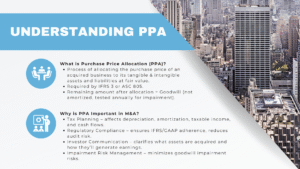
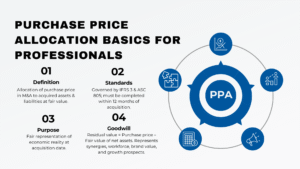
It is always a good idea to have a clear view of what a valuation expert is actually being commissioned to do before assessing the valuation expert. A PPA engagement is about identifying all the tangible and intangible assets that were acquired during a business combination, recognizing their fair values as at the date of acquisition, and the remaining value is classified as goodwill. This is much more than a mere asset appraisal. Customer relationships, trade names, non-compete agreements, technology platforms, in-process research and development, all of these might require individual recognition and valuation, which may be based on specific specialised methodologies, e.g. the relief-from-royalty method, the multi-period excess earnings method or the with-and-without method.
PPA valuation experts hence have an interpretive role to play. They have to use technical models of valuation and have to use judgment on assumptions like discount rates, customer attrition rates, royalty rates, and useful economic lives. These assumptions may have a great impact on the financial statements produced. When a greater fair value is attributed to a finite-lived intangible asset such as that of a business enterprise, such as will reduce goodwill but increase future amortisation charges such that in effect it will impact on the reported earnings of the acquirer.
Something to also consider is that the external valuation professionals collaborate with the internal accounting and auditors of the acquiring company. The company external auditors will review and challenge their work product, which in most jurisdictions will be a detailed valuation report. This implies that the credibility, methodology and documentation standards of the expert are as important as the final numbers. A professional who is incapable of explaining his or her assumptions as well as being subject to audit scrutiny is not an asset but a liability no matter how elaborate his or her models may seem.
Five Important Tips on Hiring the Right Expert
The selection of an expert is not solely a question of selecting a household company. It should be a purposeful and criteria-based process of selection. These five are important aspects that always distinguish great PPA valuation experts and those who fail as the complexity increases.
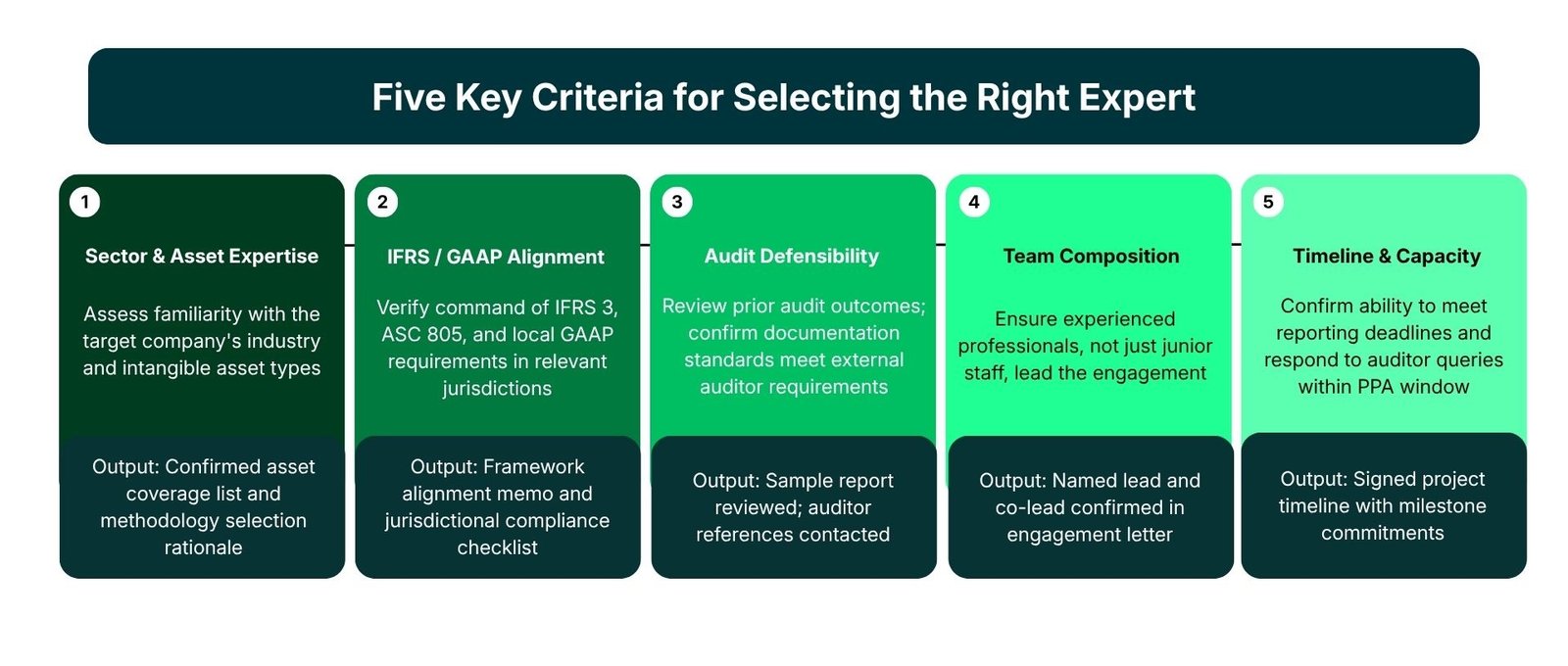
Picture 1: Five-Step Expert Selection Process Flow (How to Choose the Right PPA Valuation Expert)
The one that many organisations get wrong is the first requirement; sector and asset expertise. A valuation firm that has high experience in real estate will lack the expertise required to value a software company technology stack or a drug pipeline of a pharmaceutical firm. Always seek previous examples of similar types of intangible assets. The second criterion is that of IFRS and GAAP alignment which is especially relevant in cross-border transactions by which two reporting systems need to be harmonized.
The other three criteria audit defensibility, team composition, and timeline capacity are not significantly considered at the stage of vendor selection. Perhaps the most significant is audit defensibility. Since the high-profile audit failures in various European conglomerates in 201822, regulators and auditors now tend to be much more stringent in their review of PPA reports. Companies that are unable to support their assumptions with solid, well-documented evidence are going to waste time and money on audit inquiries and possible restatements by the acquirer. Regarding the composition of a team, never leave unclear who will do the day-to-day work – it is not unusual to have senior partners pitch the engagement but leave it to junior staff.
The PPA Engagement Process: Kickoff to Final Report
Since the process of engaging in PPA is generally the same, having an idea of what to expect, what questions to ask, and an early warning of dangerous situations will benefit you greatly. An effective PPA participation is usually a five stage process, beginning with the kickoff to the ultimate sign-off. The whole window is usually narrowed as there is financial reporting pressure all around through the deadline which is usually twelve months after the acquisition date as per the IFRS 3.
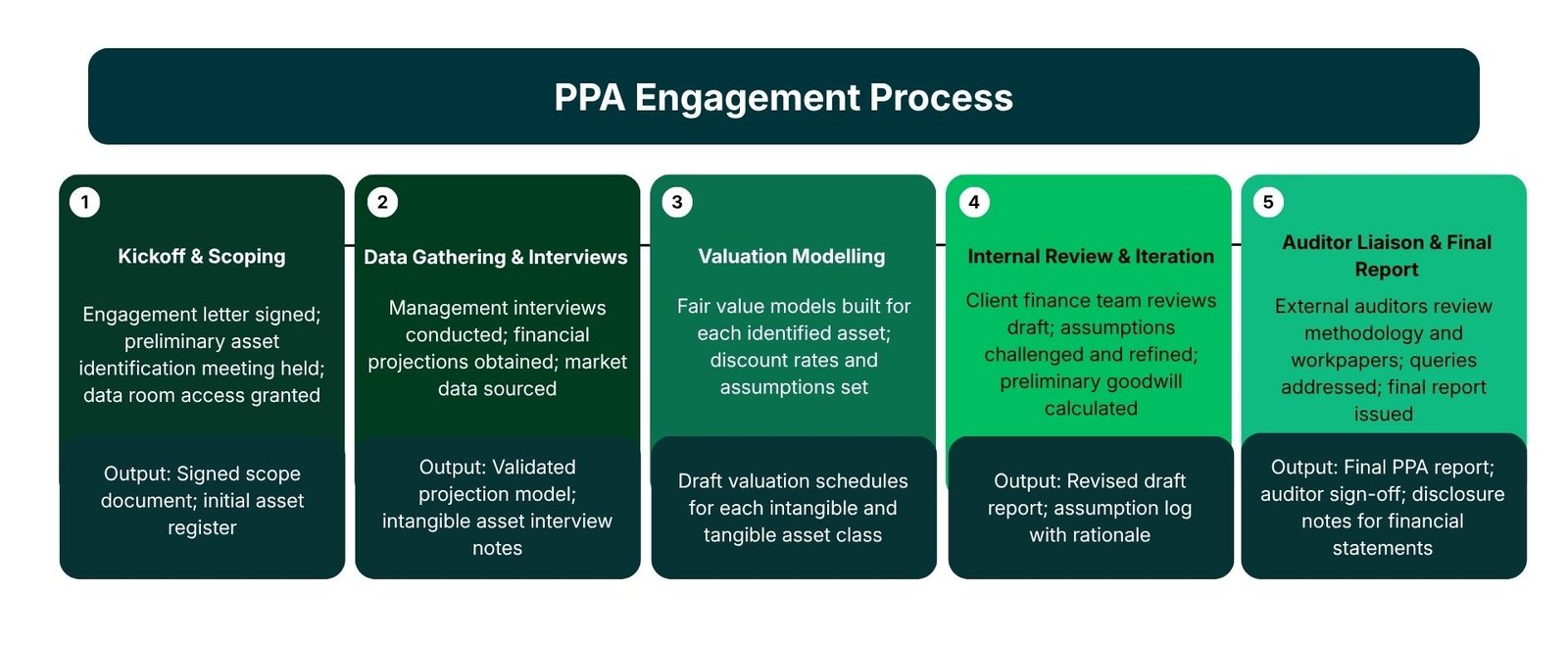
Picture 2: PPA Engagement Process Flow — Phases and Deliverables (How to Choose the Right PPA Valuation Expert)
The friction point is encountered during the data gathering stage which is one of the most frequent ones. Acquisitions tend to underestimate the amount of organized financial information that the valuation professional will require of the target, e.g. detailed information on customer revenue, past churn rates, and future revenue growth by product line or geography. Time slips at this point trickle down the engagement. A good PPA valuation specialist will elaborate a request list of data at the start up and will proactively escalate gaps, instead of operating with unfinished inputs.
The auditor liaison stage should be given special consideration especially when dealing with the post-merger integration valuation. Most acquirers believe that valuation report is the end-of-the-road. Practically it is the beginning point of an audit review which may be as time-consuming as the valuation itself. Seasoned auditors who have been employed with top audit companies know the degree of documentation, sensitivity analysis, and assumption benchmarking auditors demand. The non-capable can cause serious delays during the audit and in the worst situations cause restatements of the valuation.
Issues, Red Flags, and Practice Lessons
In the deal arena there are several pitfalls that have become common in PPA deals. Based on these trends, professionals engaged in the review or oversight of valuation experts can learn some valuable lessons.
Take the case of a European consumer goods company of medium size that purchased a local rival in southeast Asia in 2021. The acquiring company chose a local valuation company mainly on basis of cost. Although the firm was competent in the tangible asset appraisals, it had no experience in appraising the brand intangibles under the IFRS 3. The resulting PPA grossly underestimated the purchased brand with the bulk of the purchase amount being goodwill. This caught the eyes of the companies auditors who ordered a second firm to review the engagement. The second engagement was more expensive than the savings on the first appointment taken into consideration the delay in the filing of audited financial statements.
A second didactic example is of a technology acquirer, based in North America, that has sought the advice of a globally-recognized consultancy firm in making a cross-border acquisition in 2019. Although the firm has brand awareness, it did not have depth in its engagement team in the terms of areas involved in software business of subscription. They have valued their customer relationships based on a standard assumption of attrition rather than the cohort analysis that should have been used on the business model of the target. The resulting intangible customer relationship was graded down by about 18% and was only discovered in an internal audit the next year. The moral of the story is obvious; brand name recognition is not the alternative to asset and sector specific knowledge.
| Red Flag | What It Signals | Recommended Action |
| Generic methodology proposed. | No experience in the industry. | Ask them to give industry specific examples of previous work. |
| No named engagement lead | Junior staff will carry out the bulk of work. | Demand named lead on the engagement letter. |
| Vague on audit history | Possible prior audit risks or restatements. | Sample of order reference and past report. |
| Unusually low fee proposal | Underpowering may exist in the form of resource underengagement. | Comparing scope line by line. |
| Delayed data request list | Lack of discipline of project management. | Order the data list not later than 48 hours after engagement commenced. |
Table 1: Common Red Flags When Evaluating PPA Valuation Experts (How to Choose the Right PPA Valuation Expert)
Such situations point to a more general rule, representing the purchase price allocation best practices: the vetting of PPA valuation experts must be as rigorous as the due diligence conducted on the target company itself. Time and financial limitations tend to force acquirers to cut corners when it comes to expert selection – and that choice would almost inevitably cost more than the saved shortcut.
Purchase Price Allocation Best Practices How to Work Well with Your Expert
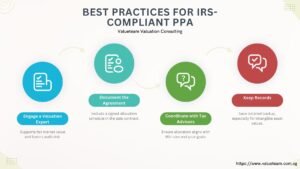
Having the appropriate expert is half the battle. It is also important how you treat them. Those organisations that adhere to the purchase price allocation best practices in the management of the expert relationship will always have quicker, tidier, and more justifiable PPA results. The section provides a practical advice to every individual concerned with the management of a PPA engagement, be it a finance manager, controller or transaction advisory professional.
The most effective practice is early engagement. The experts in PPA valuation should be invited to the process before the deal is closed even during the due diligence phase so they can start listing the categories of intangible assets, identifying any data gaps and harmonizing with the expectations of the audit team. This greatly abridges the PPA close timeline. Early engagement is not only a beneficial feature in jurisdictions where provisional PPA figures are required to be reported in interim financial statements, it is also an operationally required feature.
Another under area that organisations have been found wanting to invest in is internal preparation. The presence of a special project coordinator in the company, the awareness of the finance team about the PPA process and schedule, and the organization of data packages in advance all help to decrease the friction of the engagement. Lots of delays do not occur due to the valuation expert at all, they are caused by internal disorganisation of the acquirer side. Post-merger integration valuation is a team sport, and the internal team needs to be as well-prepared as the external expert.
| Best Practice | Why It Matters |
| Engage the expert pre-close | Lessens after-close schedule strain; allows it to correspond with auditors early. |
| Delegate a PPA coordinator. | Single point of contact minimizes miscommunication and delays in requests of data. |
| Agree with auditors on preliminary methodology. | Avoids the methodology disagreements which postpone a final sign-off. |
| Record all the assumption rationale. | Supports audit trail; promotes defensibility in regulatory audit. |
| Revise as you build. | Eschews late changes in the report which squeeze the time slot to file. |
| Sensitivity analysis of requests. | Shows strength; well demanded by most big audit companies. |
Table 2: Purchase Price Allocation Best Practices for Managing the Expert Relationship (How to Choose the Right PPA Valuation Expert)
A further best practice that is increasingly becoming common among advanced acquirers is asking that the sensitivity analysis be provided as part of the final report deliverable. Sensitivity tables which indicate the impact of varying key assumptions (e.g. discount rates or attrition rates) to the fair value of important intangibles are analysis-wise and auditing-wise friendly. They show how the expert has validated the soundness of his or her conclusions instead of basing them on a single group of assumptions. This analytical rigour is essential in the method of post-merger integration valuation where integration costs and revenue synergies may change underlying assumptions by significant amounts.
Summary: Recommendations to Professionals
One of the biggest points of decision making in the post acquisition process and, however, it receives much less attention as compared to the acquisition per se is selecting the right PPA valuation professionals. The greater test of those who make this decision pass successfully is that they do it like they would financial due diligence with the same discipline and rigour. They take on board experience within the industry, as opposed to reputability of the company. Their query is on the composition of teams, and not just the pitch team. They view audit defensibility as a follow up, but rather at the start.
Junior and mid-level professionals coming into this space can only see the impacts on the ground. To begin with, learn the fundamentals of PPA – understanding how and why purchase price allocation works will elevate you to a much greater level of participants in any purchase. Second, learn to be suspicious of external professionals; the questions you ask, the sources you consult, the admonitions you give will make you define the quality of the interaction. Third, invest along the internal side of the equation – data preparation, internal coordination and early auditor alignment are right under your control and outsize the effects.
Lastly, purchase price allocation best practices are not only on the technical provisions. They reflect a long tradition of transparency and accountability on the financial reporting. Every dollar of purchase cost that is duly entered to the right asset is a dollar that duly enlightens the investors, lenders and regulators. The essence of market integrity in that respect is the role of PPA valuation professionals and the quality of the respective professional who is hired. This is not an option to those who want to master the field of finance, accounting or transaction advisory. It is foundational.