
Advanced Fair Value Valuation under IFRS 13

Fair Value Measurement Techniques for PPA under IFRS 13 Learn Advanced Fair Value Valuation under IFRS 13 The decision on the extent to which the assets and liabilities of a company would have a value following an acquisition is not merely a financial undertaking in the context of mergers and acquisitions (M&A), but also a […]
Advanced PPA Valuation Techniques for Financial Analysts
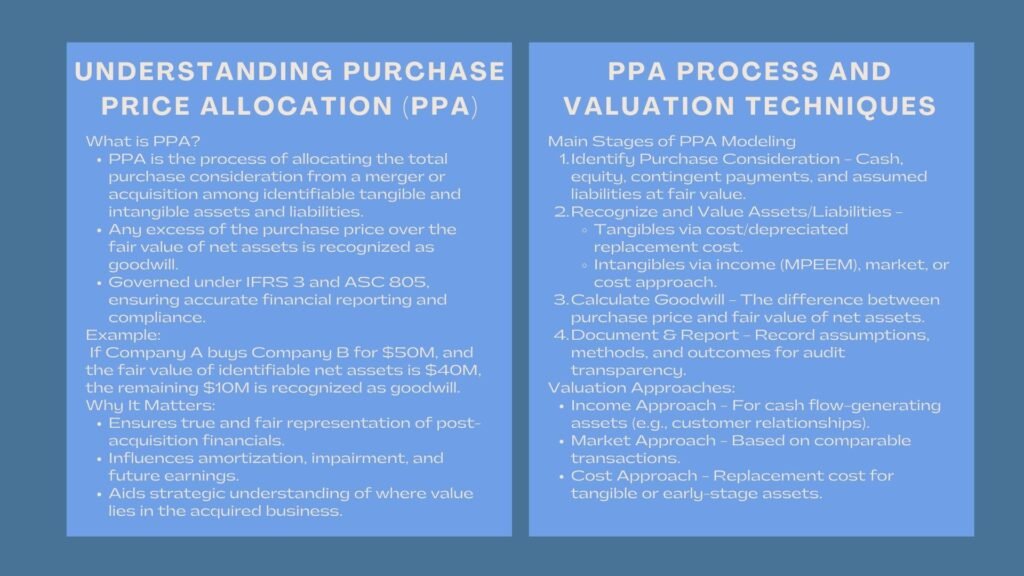
Purchase Price Allocation (PPA) Modeling Explained for Finance Professionals Introduction to Advanced PPA Valuation Techniques for Financial Analysts Mercers and acquisitions (M&A) can be considered to be the most strategic and complicated transactions of a company in terms of corporate finance world. In addition to purchase price and structure of the deal negotiations, there is […]
Purchase Price vs Enterprise vs Equity Value
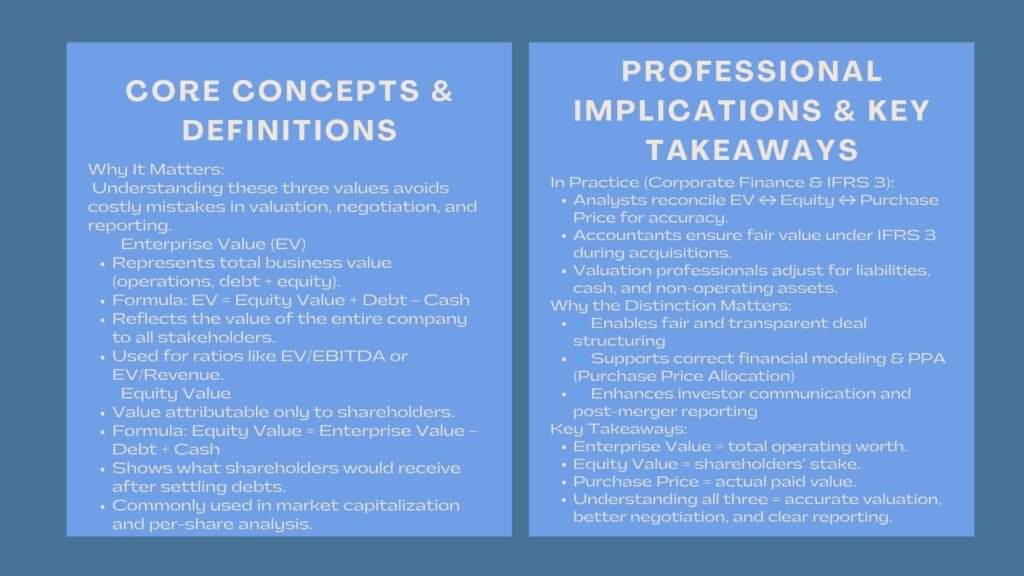
Difference Between Purchase Price, Enterprise Value, and Equity Value Learn Difference Purchase Price vs Enterprise vs Equity Value When engaging in mergers, acquisitions, and corporate valuations, the distinction between purchase price, enterprise value, as well as equity value is a basic need to know. All terms represent a different understanding of what a company is […]
Understanding Purchase Consideration

Understanding Purchase Consideration Purchase consideration is the fair value of either that which the acquiring company imparts in place of control over another business. It encompasses cash as well as shares, debts instruments and future performance type of contingent payments. The purchase will have to be valued at fair value on the date of acquisition, […]
Purchase Consideration Components in MA

Key Components of Purchase Consideration: Cash, Shares, and Contingent Payments Learn Purchase Consideration Components in MA In any merger or acquisition, the cost of the transaction is much bigger than a cash deal. The elements of the modern deal structure are frequently a combination of various elements of consideration – cash, equity, and contingent, each […]
Guide to IFRS 3 Purchase Price Allocation

Step-by-Step Guide to Allocating Purchase Price under IFRS 3 Understanding Guide to IFRS 3 Purchase Price Allocation Business combinations are also some of the most complex in the financial reporting. In the acquisition of a company, it should decide how much was paid, what was acquired and how the aspects are reflected in the financial […]
Understanding Purchase Price Consideration in MA

Understanding Purchase Price Consideration in Mergers and Acquisitions Learn Understanding Purchase Price Consideration in MA Purchase price consideration is the most important and sometimes the most bargained part of any merger or acquisition. It does not only dictate the amount, which a buyer would pay the target company, but also how the payment would be […]
How Effective PPA Enhances Financial Reporting and Strategic Synergies
Learn How Effective PPA Enhances Financial Reporting and Strategic Synergies In the dynamic landscape of mergers and acquisitions (M&A), Purchase Price Allocation (PPA) is not merely a post-deal formality—it is a powerful financial and strategic tool that bridges the gap between transaction execution and long-term value realization. Often misunderstood as just an accounting requirement, effective […]
How to Allocate Purchase Price Across Asset Classes IRS Form 8594
Learn How to Allocate Purchase Price Across Asset Classes IRS Form 8594 In the United States, selling a business is not just a commercial deal—it’s a taxable event requiring specific IRS reporting. One critical form is IRS Form 8594, “Asset Acquisition Statement Under Section 1060,” which ensures the buyer and seller report the purchase price […]
PPA Tax Impact on Depreciation Strategies Singapore
Learn PPA Tax Impact on Depreciation Strategies Singapore Though often seen as a post-deal compliance task, Purchase Price Allocation (PPA) has become a strategic element in M&A, shaping tax outcomes, depreciation, and long-term financial performance. While firms focus on negotiations and integration, they often overlook how allocation impacts earnings, tax rates, and investor perception. Under […]