Introduction: Understanding PPA in Small Business Deals
If you’re a small business owner thinking about selling your business or acquiring another, chances are you’ve heard about something called Purchase Price Allocation, or PPA. It may sound like accounting jargon, but it plays a big role in determining your tax outcomes, advanced financial reporting, and even how your business is valued post-deal.
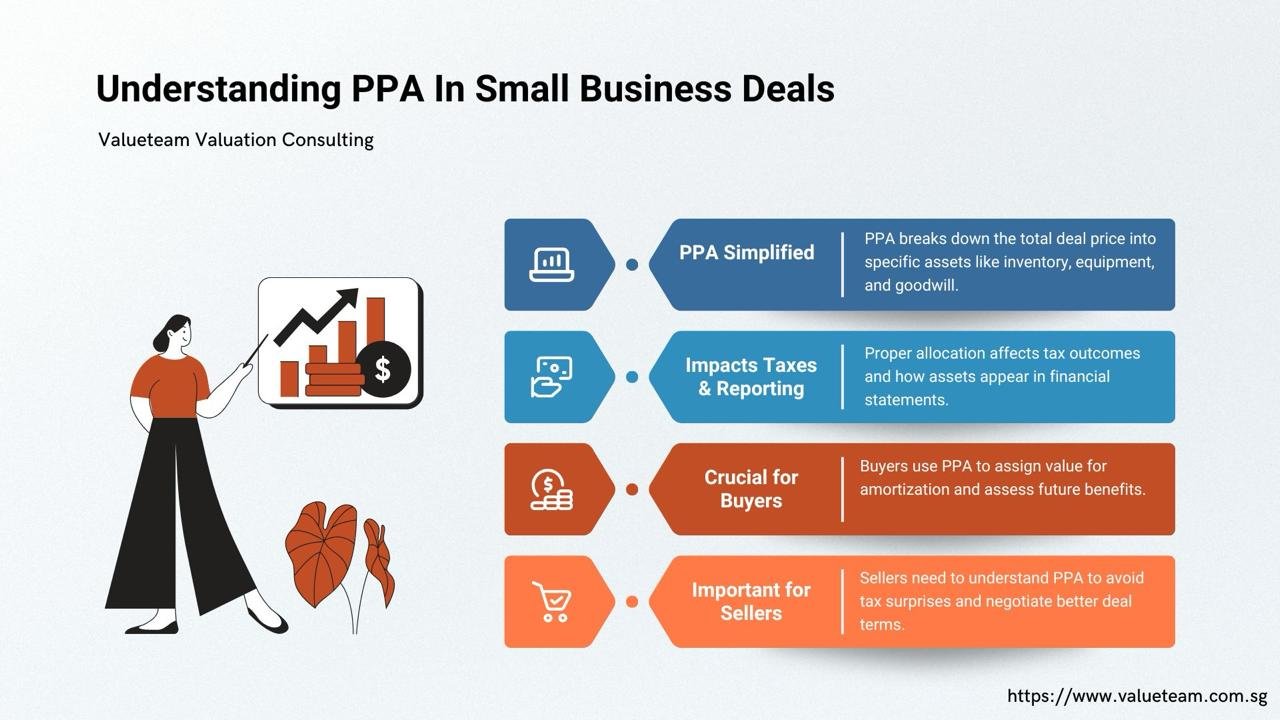
In simple terms, PPA (Purchase Price Allocation) is the process of breaking down the total price paid in a business acquisition into the actual assets being acquired—like inventory, equipment, customer lists, and goodwill. Whether you’re the buyer or the seller, understanding how this price is allocated can mean the difference between a smart deal and a costly oversight.
What Is Purchase Price Allocation (PPA)?
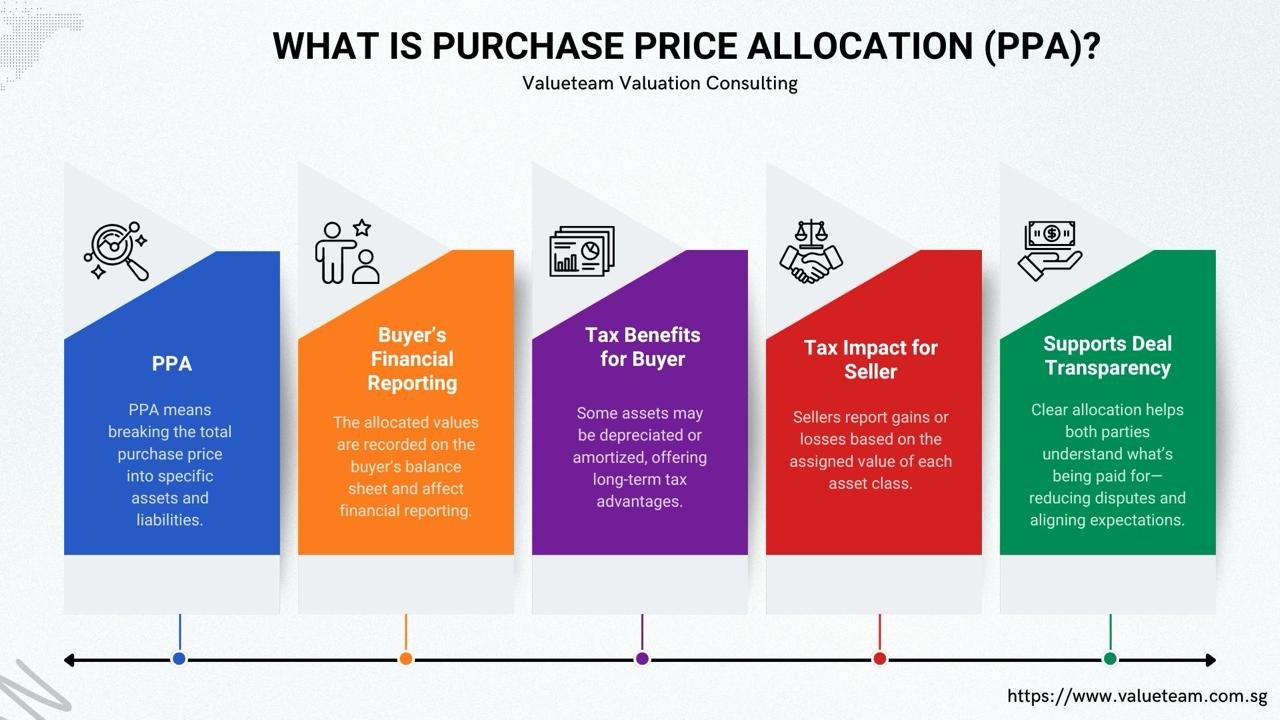
When one business acquires another, the buyer doesn’t just hand over a lump sum and call it a day. The purchase price has to be “allocated” across the individual assets and liabilities that make up the acquired company. These might include tangible assets like office equipment or property, as well as intangible ones like customer relationships or brand names.
The buyer records these values on their balance sheet, and depending on how the assets are classified, they may be eligible for depreciation or amortization over time—creating potential tax savings. On the flip side, sellers also report gains or losses based on the value of each asset class.
Why PPA Essentials Matters for Small Business Owners in Singapore
You might think PPA only affects large corporations or complex mergers, but that’s not the case. Even a simple acquisition between two SMEs must follow accounting and tax standards. If the purchase price is not allocated correctly, you could run into trouble with tax authorities or face unexpected costs later.
Here’s why small business owners should care:
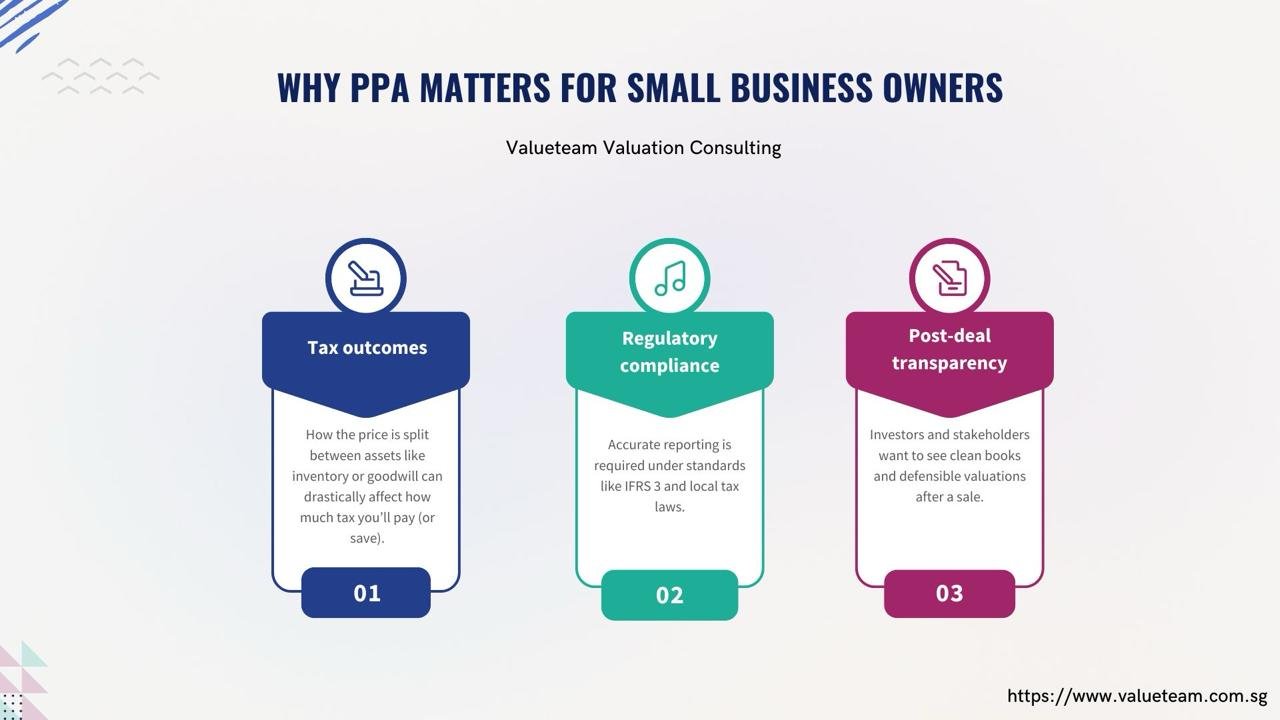
- Tax outcomes: How the price is split between assets like inventory or goodwill can drastically affect how much tax you’ll pay (or save).
- Regulatory compliance: Accurate reporting is required under standards like IFRS 3 and local tax laws.
- Post-deal transparency: Investors and stakeholders want to see clean books and defensible valuations after a sale.
Common Asset Classes PPA in Singapore
PPA typically categorizes assets into specific classes. For small businesses, the most common categories include:
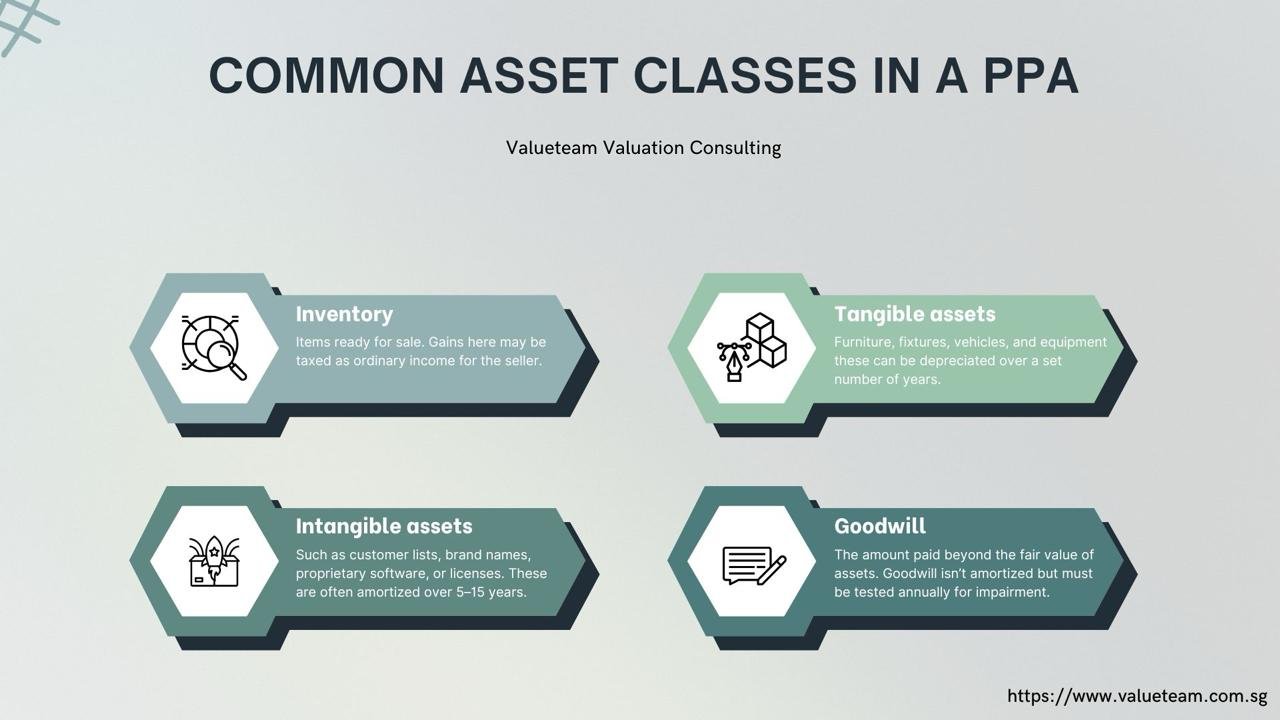
- Inventory: Items ready for sale. Gains here may be taxed as ordinary income for the seller.
- Tangible assets: Furniture, fixtures, vehicles, and equipment—these can be depreciated over a set number of years.
- Intangible assets: Such as customer lists, brand names, proprietary software, or licenses. These are often amortized over 5–15 years.
- Goodwill: The amount paid beyond the fair value of assets. Goodwill isn’t amortized but must be tested annually for impairment.
Understanding how your business’s value is broken down across these buckets helps you plan better and avoid tax surprises.
Best Practices for Small Business PPA in Singapore
Even if you’re not a financial expert, there are some practical steps you can take to ensure your PPA is well-handled:
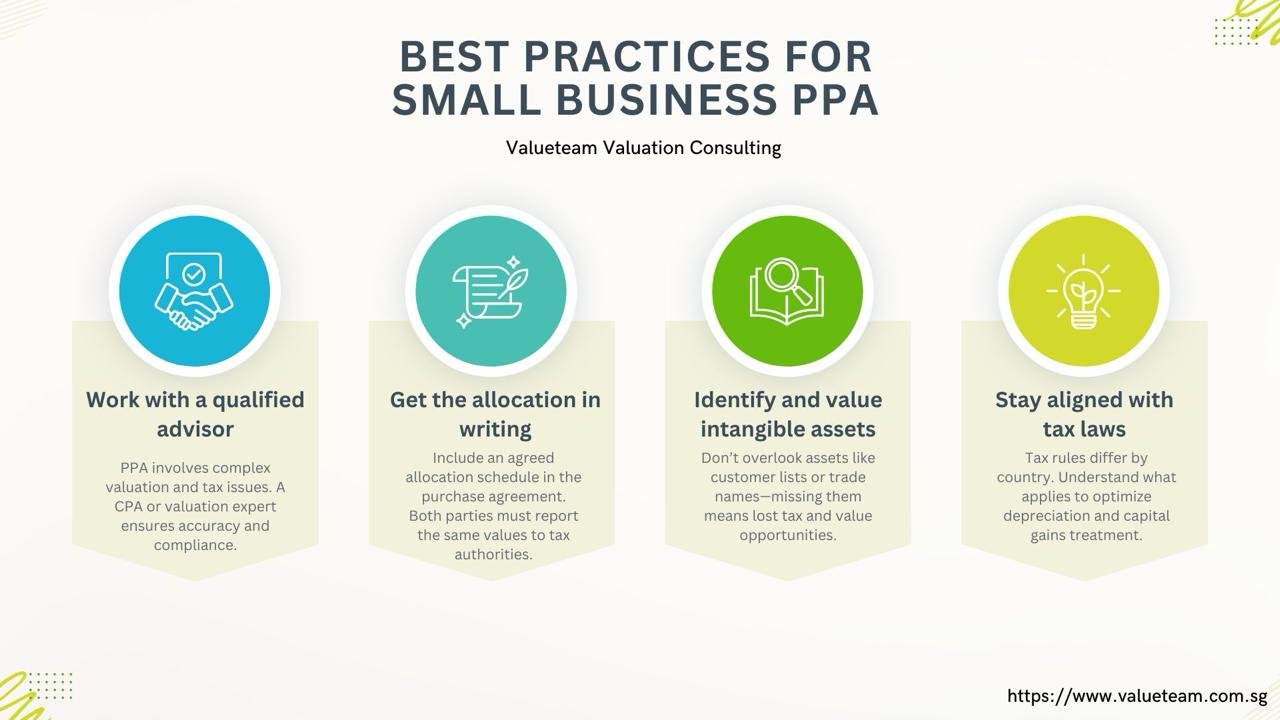
1. Work with a qualified advisor
PPA involves valuation techniques and tax implications that can get complicated fast. Hiring a certified public accountant (CPA) or valuation specialist ensures you’re getting the numbers right—and staying compliant.
2. Get the allocation in writing
If you’re selling your business, make sure the purchase agreement includes a mutually agreed-upon allocation schedule. Both buyer and seller must file the same values with tax authorities to avoid red flags.
3. Identify and value PPA intangible assets
Many small businesses overlook intangible assets like customer databases, business systems, or trade names. If these are left unvalued, you might miss out on amortization benefits or underreport business value.
4. Stay aligned with tax laws
Tax treatment of PPA varies by jurisdiction. For instance, some assets can be depreciated faster or attract capital gains treatment. Knowing what applies in your country helps you optimize your position.
Example: How PPA Plays Out in a Small Business Deal
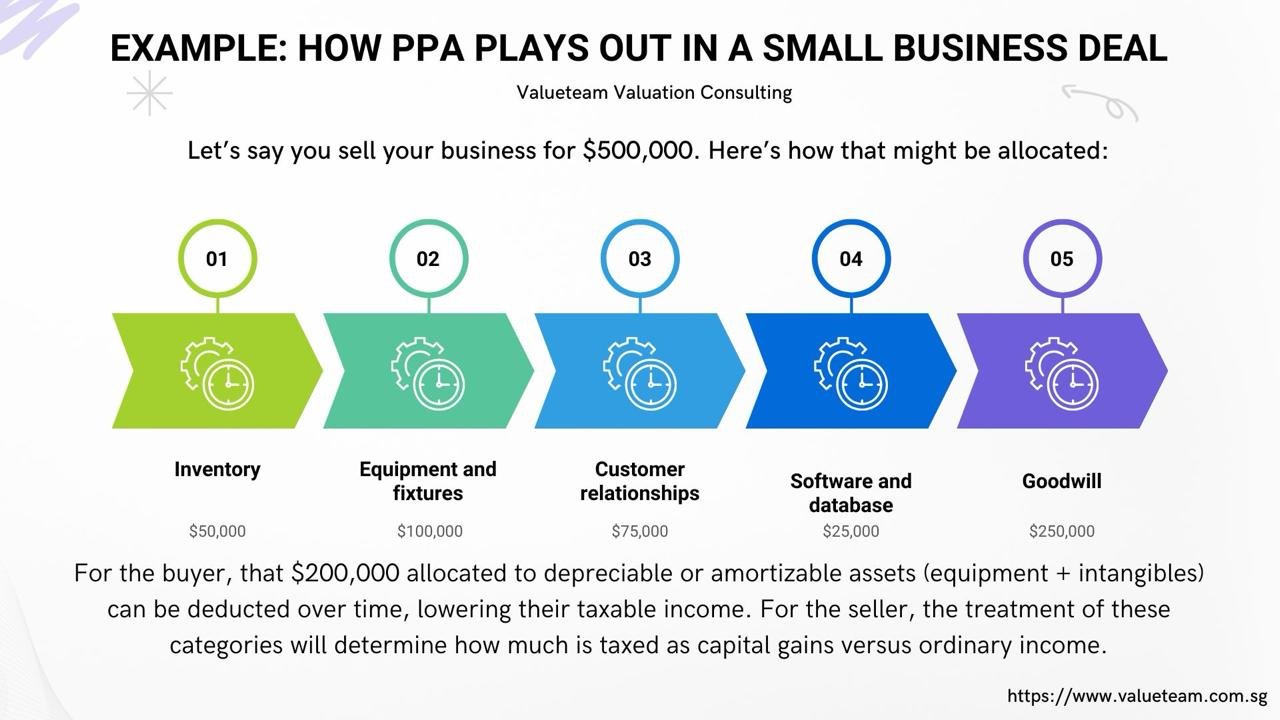
Let’s say you sell your business for $500,000. Here’s how that might be allocated:
- Inventory: $50,000
- Equipment and fixtures: $100,000
- Customer relationships: $75,000
- Software and database: $25,000
- Goodwill: $250,000
For the buyer, that $200,000 allocated to depreciable or amortizable assets (equipment + intangibles) can be deducted over time, lowering their taxable income. For the seller, the treatment of these categories will determine how much is taxed as capital gains versus ordinary income.
Without proper planning, this allocation could easily be skewed—either raising tax liabilities or leading to disputes with tax authorities.
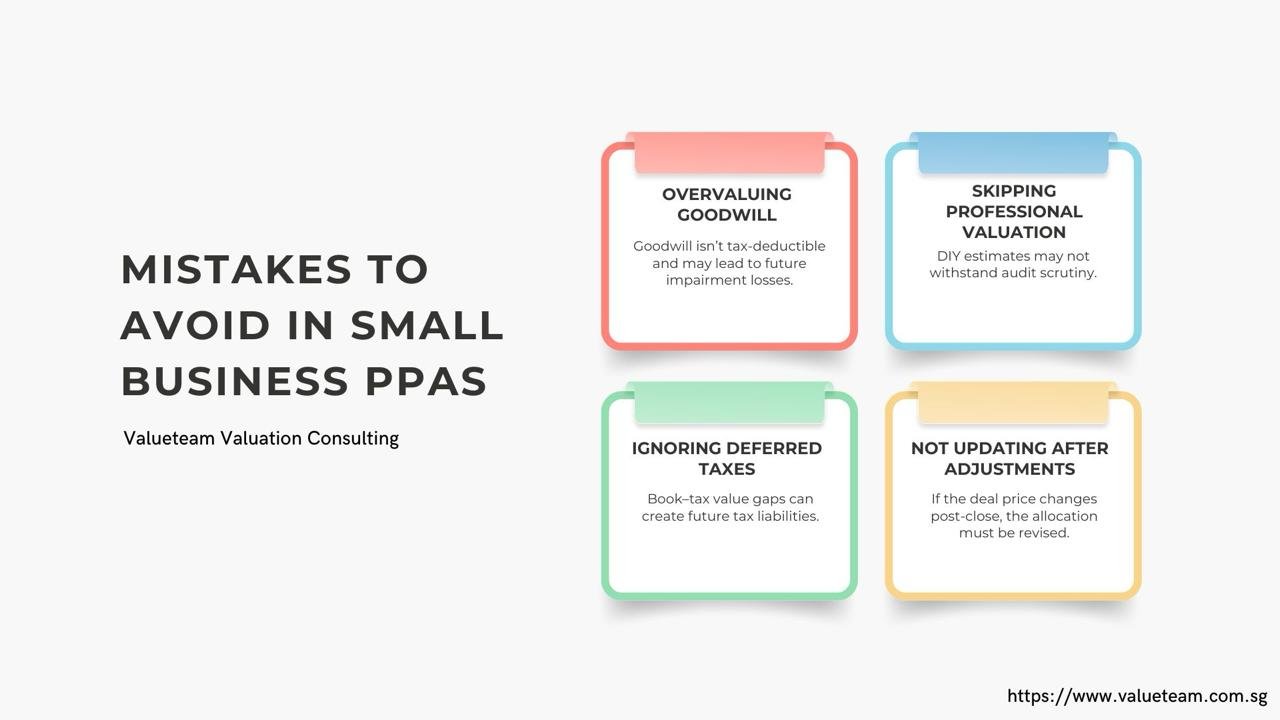
Mistakes to Avoid in small business PPAs
Some common pitfalls in small business PPAs include:
- Overvaluing goodwill: While easier to record, goodwill isn’t tax-deductible and can increase your risk of impairment losses later.
- Skipping professional valuation: DIY numbers might not hold up under audit.
- Ignoring deferred taxes: Differences between book and tax values can create future liabilities.
- Not updating after post-close adjustments If the final purchase price changes, so should the allocation.