How Does Accurate PPA Valuation Improve Acquisition Transparency?
Understanding How Accurate PPA Valuation Improves Acquisition Transparency?
The headline price is just the start of the story that investors and regulators are really interested in when two companies announce a merger. How accurate PPA valuation enhances acquisition transparency becomes evident after a deal closes and the actual accounting work starts, and a single negotiated number becomes a breakdown of the exact components of what was acquired and why. Through acquisitions, when the value determined is based on PPA, the companies have to recognize tangible assets, intangible assets, and goodwill separately, thereby providing a much better understanding to shareholders regarding the economics of the acquisition than just the purchase price does. In this article, the author examines how fair value measurement (FVM) enhances the transparency of an acquisition and why the role of professional M&A valuation services is extremely important in this context. He also discusses how PPA valuation Singapore practices align with the standards in the region and what has been learned from actual transactions where transparency has been a key driver of success. The article then points to the areas where PPA valuation on the acquisition side is most often misunderstood and explains the implications for all those developing their careers in this part of accounting/finance. It is a relevant material to know well because the activity of deals in most of the industries still continues to ris,e and the people who could explain the complex allocation well are always in demand.
How Does Accurate PPA Valuation Improve Acquisition Transparency From Day One?
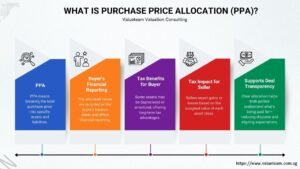
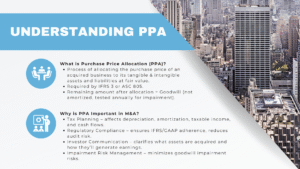
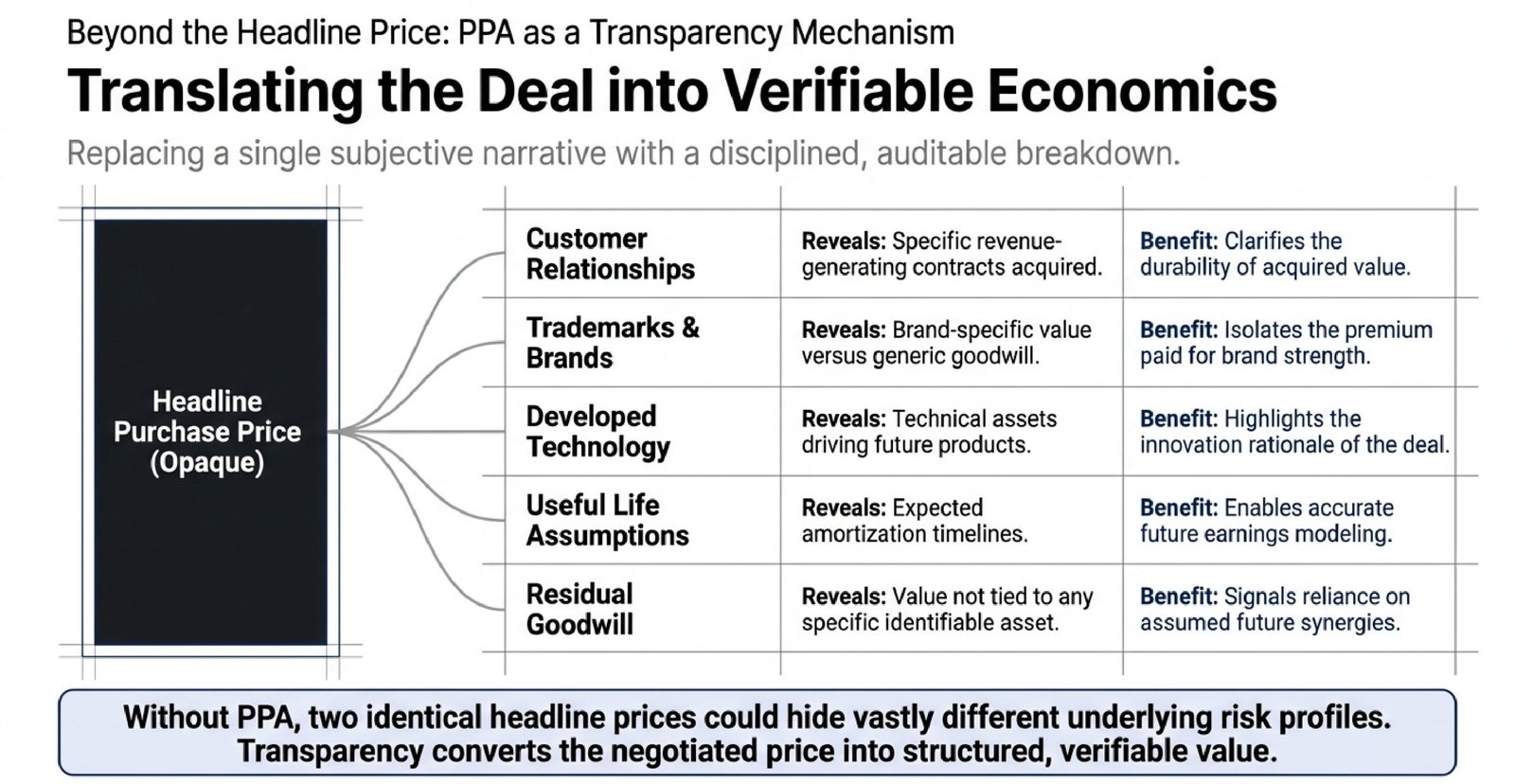
The first step in understanding what a purchase price allocation forces a company to disclose is to understand what it is. Instead of putting a single,unbundledd goodwill number on the balance sheet, accounting rules require the reporting of a breakdown of the goodwill, including separately identifiable assets such as customer relationships, trademarks, technology, and other assets that have a useful life and fair value. This disaggregation provides investors, analysts, and auditors a true perspective of what the acquirer actually paid for, as opposed to relying on the assumption that the premium price indicated some added strategic value or just an over-inflated negotiation. When purchasing a company that is valued with PPA, then PPA valuation becomes an embedded transparency mechanism, turning a negotiated figure into an auditable and structured explanation of the value. If the requirement is not in place, two companies with similar businesses being acquired at the same price by two different investors may show the acquisition in different ways, providing virtually no facts to determine what was really acquired other than what management tells investors, and no accounting evidence to substantiate the transaction. Structured purchase price allocation rules were created to fill the space between the single, subjective story and the disciplined and auditable split that could be easily verified by any careful reader.
This transparency is especially important in the months and years that follow a transaction, when investors are weighing whether they are receiving the value that management can claim that they agreed to when signing the acquisition. Having a detailed and supported purchase price allocation enables analysts to understand how each acquired asset is performing versus the assumptions made to value it, determining early warning indicators if amortisation patterns or impairment charges indicate that the deal thesis is not coming to fruition. Disclosure of “narrative” is not enough; transparency in the acquisition process through robust accounting provides a real means for markets to hold management to account when it comes to acquisitions. This detailed breakdown is also commonly used by Boards and audit committees as a means for them to assess the performance of a completed acquisition to determine if it is living up to the assumptions made in approving the transaction. A few of the more advanced boards now incorporate this into their normal post-acquisition review, so that the allocation of the original purchase price becomes a yardstick to measure actual performance a year or two after the acquisition is complete.
Why Does PPA Valuation for Acquisitions Matter for Acquisition Transparency?
The need for PPA valuation for acquisitions is of importance, as it provides a certain level of clarity that the purchase price of a transaction does not inherently offer. However, if an acquirer informs investors that a significant portion of the value of the deal is tied to finite goodwill rather than indefinite goodwill, investors have a good sense of how long the value will likely last and when the associated amortization expense will be removed from the income statement. If we take an example of two deals with the same headline price, one backed by tangible and verifiable assets and another maintained almost entirely on the back of goodwill, the underlying risk profile of the two deals could be extremely different. This type of uniform, granular reporting is a big win for analysts who could use to learn about companies that seek frequent acquisitions, because it allows them to create a realistic history of the deal assumptions that management teams have fulfilled in the past over time. If a company has a track record of well-supported purchase price allocations, that good reputation can be extended to how the market interprets its next acquisition announcement because investors are now accustomed to the fact that if a company says it is making a purchase, they know that the disclosure will be more than a simple one.
One real-life example is a consumer goods firm that bought a smaller regional player mostly for its distribution system and retail connections. The allocation of purchase price provided a good breakdown of the value of the transaction based on evidence, with a large portion of the value attributable to the customer relationship intangible, driven by specific long-term retail contracts; a moderate trademark value; and a relatively small figure for goodwill attributable to the residual. This degree of disclosure into the acquisition enabled shareholders to accurately model the future amortisation expense, and, several years later, assess whether those retail relationships had delivered on the value management had anticipated at the time of the acquisition, which a simple goodwill-only disclosure would not have been able to support. The case is a prime example of the importance of careful PPA valuation for an acquisition, not just for the accounting department, but for the market’s perception of the deal’s future success. The detailed disclosure was also found to be of great benefit to the finance team involved later, providing the acquirer’s own leadership with a yardstick to determine whether the acquired distribution relationships were indeed meeting expectations in the coming years.
Table 1: How PPA Valuation for Acquisitions Supports Acquisition Transparency
| Disclosure Element | What It Reveals | Transparency Benefit |
|---|---|---|
| Identified customer relationships | Specific revenue-generating contracts acquired | Clarifies how durable athe cquired value actually is |
| Separately valued trademarks | Brand-specific value versus generic goodwill | Shows what portion of price reflects brand strength |
| Developed technology valuation | Technical assets driving future products | Highlights innovation-related deal rationale |
| Useful life assumptions | Expected amortization timeline | Let’s investors model future earnings impact |
| Residual goodwill | Value not tied to any specific identifiable asset | Signals how much of the price relied on synergy assumptions |
How Does Fair Value Measurement in PPA Support How Accurate PPA Valuation Improves Acquisition Transparency?
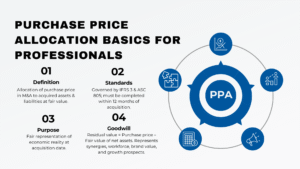
Thus, even though fair value measurement in PPA may seem like a catch-all term, it is the actual technical process that allows for the transparency of acquisition, as all acquired assets and assumed liabilities must be measured using observable market data wherever these are available, and any use of unobservable inputs must be disclosed and justified. The standard denies companies the ability to just move assets over at their book value, or just whatever price would make the numbers work out, and instead pushes them to do a proper, market-based assessment on the date of the acquisition, as to what the assets are really worth. Most practitioners look at the five points listed below when undertaking PPA work involving fair value measurement. Since valuing the subject property is the first step, selecting the best premise for valuation (highest and best use for tangible assets, or in-use for those that are only valuable when used along with other assets). Second, some choice of market inputs that are actually observed, rather than the convenient internally generated assumptions. Third, documenting and disclosing any unobservable inputs used and why. Fourth, uniformity in methodology of similar assets in the same transaction. Fifth, reconciling all individually measured fair values to the total consideration transferred; this must be internally coherent. It provides a significantly clearer and more defensible final disclosure when this is done in the five steps rather than a blended calculation of fair value measurement performed in a single step in a single PPA. Teams that embed these five steps in their early days make more noticeable improvement in their habits than teams that mimic the habits of one of the few senior colleagues that happened to use them in a past engagement, which was rushed.
The correct PPA fair value measurement is not just a matter of the first filing; it has implications that last long after that. When a company undervalues the fair value of the acquired intangibles, it can gradually eat away at the earnings reported over a number of years – until the point that a severe impairment charge is required to clean up the books, which eliminates some of the transparency the initial disclosure was supposed to offer. If a company undervalues the fair value, and allows an excessive portion of the purchase price to be allocated to goodwill, the disclosure becomes less informative, as goodwill reveals much less about the specific factors contributing to the value of a deal than the properly identified and measured intangible assets. In essence, either error, particularly when they are not easily detected, slowly diminishes the transparency within the acquisition, a fact carefully measured at fair value under PPA arrangements. Those who follow a company’s track over several different acquisition events will quickly pick up on this trend, and a string of subsequent impairment charges for intangible overstimations will dampen the market’s excitement about the next deal that the buyer unveils.
What Role Do M&A Valuation Services and PPA Valuation Singapore Practices Play?
The professional M&A valuation service is a key part of achieving acquisition transparency in practice, as few internal finance teams possess the expertise, market data and independence necessary to complete a defensible fair value measurement of PPA on their own. The objective of independent M&A valuation services is to provide the structured methodology, industry benchmarking dat,a and a level of objectivity that enhances the trustworthiness of the valuation disclosures to auditors, regulators and investors. Focusing on purchase price allocations as a rushed formality will not result in a well-supported allocation. Businesses that involve a professional valuation specialist at an early stage in the deal process, not after signing, consistently achieve a better allocation, with thorough and well-supported purchase price allocations. Firms that provide M&A valuation services tend to emphasise the importance of being engaged early in a transaction, as there is far less time to be able to collect the detailed information that a defensible fair value analysis truly needs when the firm is engaged late in the transaction. Teams that establish a “relationship” with a trusted firm that values M&A transactions, as opposed to working with a different one for each transaction, often find that transactions go more smoothly because the firm is familiar with the industry, reporting requirements, and the “deal structure” of the acquirer.
The framework for PPA valuation Singapore follows the same global framework, with some regional nuances such as the accounting standards applied by companies listed in or operating in Singapore, and the specific mix found in the Singaporean market of family businesses, regional trading firm,s and tech start-ups. In a cross-border acquisition with a Singapore-based logistics operator, for example, special consideration had to be given to the valuation and disclosure of long-term shipping and warehousing contracts, which formed an important part of the value of the underlying business assets. This form of local contract structures and industry practices would be difficult to see from a one-size-fits-all perspective, which is what PPA valuation Singapore will definitely need to consider. Firms that specialize in PPA valuation Singapore also tend to be more familiar with local regulatory and disclosure expectations, which is useful in expediting the review process when a firm’s local auditors and regulators review the resulting purchase price allocation. It is essential for the regional expertise to be on the team in all cross-border transactions where the valuation team may not be aware of local business norms and the way that contracts are structured, or the way in which the industry works in Singapore.
What Lessons Show How Accurate PPA Valuation Improves Acquisition Transparency in Practice?
In the many transactions that have been closed, a few lessons become repeated so frequently that they are truly relevant to anyone wanting to understand how accurate PPA valuation improves acquisition transparency in real deals. The first step is to go through the purchase price allocation process as an actual analysis, rather than as a compliance exercise, because superficial and rushed work will hinder what they are trying to achieve with the process, which is transparency. Second, make clear assumptions in the disclosure so that an auditor or analyst who reads the disclosure can follow the reasoning without requiring a walkthrough from the original disclosure team. Third, re-evaluate the original valuation assumptions regularly after closing, compare the actual results to the projections mad,e and learn as you go for future transactions because this is the place where the real learning occurs. Fourth, establish a regular internal format for the purchase price allocation work from transaction to transaction, because as the audit analyst, you’re going to find it easier to review each disclosure with an auditor than a format that makes a meaningful change from one transaction to the next.
But the most obvious takeaway is that transparency in acquisitions isn’t one disclosure event, but a continuing practice that keeps going long after the filing, with amortization schedules, impairment tests and follow-on performance reviews all continuing to question the initial valuation. Firms that take the time to make purchase price allocation a business decision instead of a mere trick to get through the transaction are more likely to establish long-term credibility with investors in future transactions. The professionals who grasp the link between PPA valuation for acquisitions, PPA valuation of fair value, and post-deal reporting become immensely useful members of any real strategic transactions deal team. This expanded knowledge also helps to make the allocation more understandable to a board or investment committee that is more likely to be able to discuss the allocation strategy rather than the allocation mechanics, as it is described in the context of a model for allocating excess earnings. This particular communication competency is frequently what distinguishes a professional’s career in valuation from a continuous chain of mistrust from a professional’s senior stakeholders throughouttheir career.
Conclusion: Key Takeaways on How Accurate PPA Valuation Improves Acquisition Transparency
How accurate PPA valuation can enhance the transparency of any Acquisition is a key consideration for those in the accounting, valuation, and corporate development field, as it directly influences the level of understanding investors and regulators can have regarding the acquisition strategy of a company. The logical next step for those looking to pursue a career in this area is to learn about actual purchase price allocation disclosures from public company filings, how fair value measurement in PPA relates to reported amortization and eventual impairment charges, and to familiarize oneself with the application of M&A valuation services and PPA valuation in Singapore in actual transactions in the region. Check out a few deals in which performance has been subsequently judged against the original valuation assumptions, and you’ll see why it’s important to study this discipline before the filing deadline. With real seriousness, PPA valuation is a tool to make an acquisition transparent, not just an accounting exercise done in the background of a much bigger deal story. Do so for one recent andwell-documentedd acquisition, walk through the footnote line by line, and determine what the disclosure actually tells you about the underlying business strategy for the acquisition; doing this for a variety of industries will result in better, more transferable skills – better than studying accounting standards alone. As the years go on, this skill of close reading makes purchase price allocation footnotes one of the most informative aspects of an acquisition disclosure.