How Expert PPA Valuation Reduces Audit Risks?

How Expert PPA Valuation Reduces Audit Risks?

Understanding How Expert PPA Valuation Reduces Audit Risks

One of the most widely questioned topics in post-acquisition accounting is the purchase price allocation, because it can lead to substantial regulatory and audit liabilities if it is incorrect. As auditors are looking for defensible, well-documented, and in line with market evidence, the fair values assigned to acquired assets and liabilities under IFRS 3 PPA requirements are the focus of expert PPA Valuation. If there is no PPA process, the companies face the risks of PPA Audit, such as Restated Financials, Regulatory Inquiries and Reputational Damage. The article outlines the relationship between PPA valuation and audit risk, reviews the PPA valuation process that the auditor would want to observe and concludes with some real-life experiences and lessons learned for finance professionals pursuing a career in valuation or audit-related roles. 
How Expert PPA Valuation Reduces Audit Risks?

What Is PPA Valuation and Why Does It Matter Under IFRS 3?

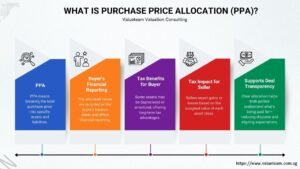
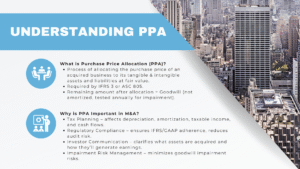
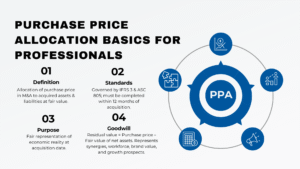
Purchase price allocation is the allocation of the total consideration received in a business combination to the identifiable assets acquired and liabilities assumed at fair value, with any residual amount being attributed to goodwill. It is not only tangible assets like property and inventory, but also identifiable intangible assets like customer relationships, trademarks, developed technology, or non-compete agreements that may not have been recorded on the target’s balance sheet prior to the PPA. These intangible assets are not traded in markets where the cost of a transaction is typically visible; therefore, valuation requires the expertise and judgment of the specialist, and not just a reference to a market price, which is why PPA Valuation is not a simple accounting process, but a specialised task within corporate finance. It’s a judgment call that can have a significant impact on the financial statement results of the transaction in the short- and long-term and which can only be made after a number of reporting periods once the acquired business has been allowed to perform against the assumptions embedded in that model.

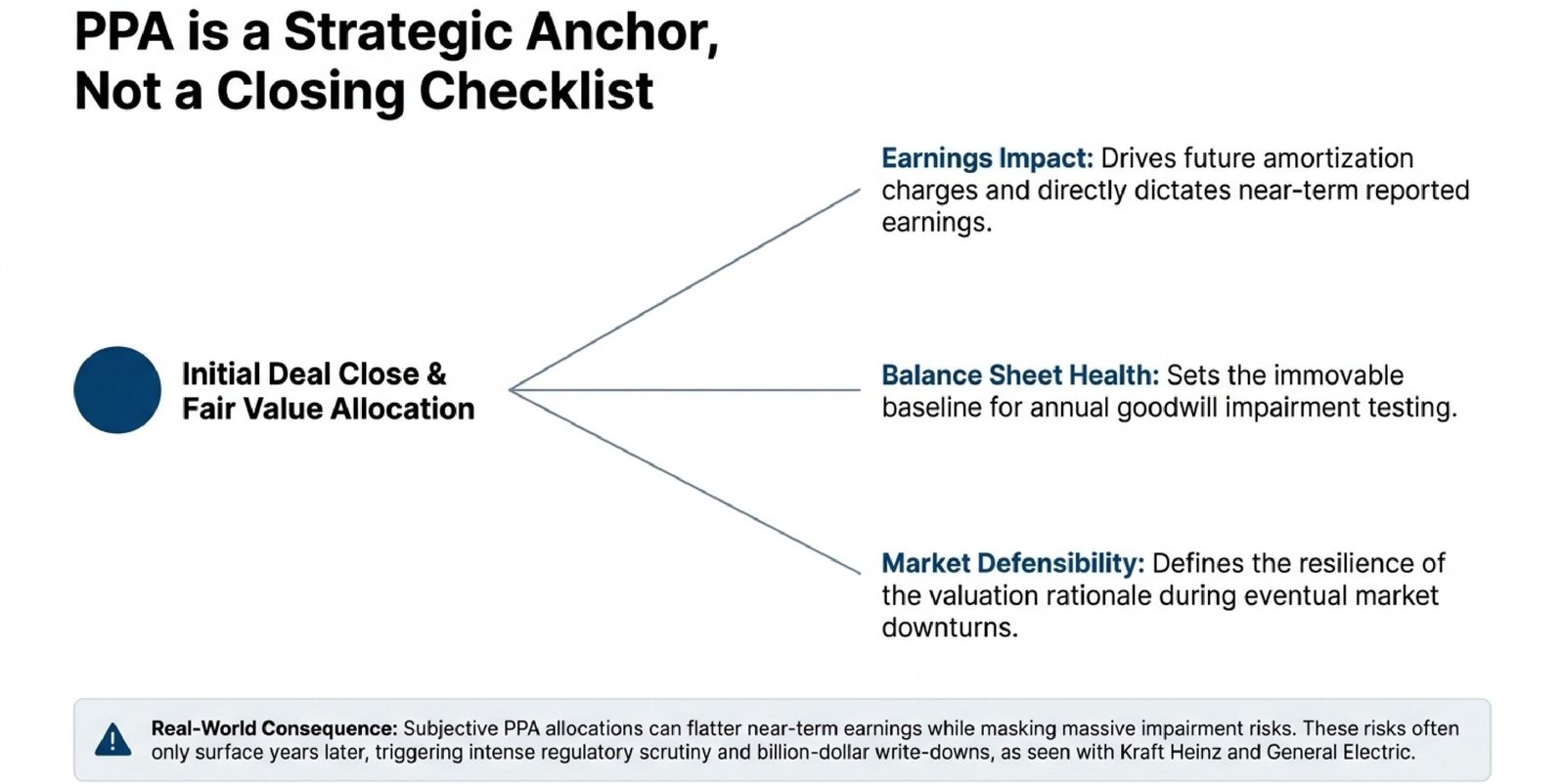
Accurately reporting PPA is important not just during the reporting period. Fair values assigned at the time of acquisition influence future amortisation charges, provide the starting point for future impairment testing, and directly impact reported earnings for multiple years post the deal. A PPA that inflates the value of long-lived intangibles, or deflates goodwill, can boost near-term profits but secretly create the risk of an impairment that only becomes apparent when conditions in the market deteriorate, sometimes years after the deal team has been moved elsewhere. This is why PPA has proven to be one of the first areas auditors, both internal and external, and, increasingly, securities regulators look at when performing an accounting review of a business combination, and why finance professionals with the requisite knowledge of the mechanics of valuing a business and the audit expectations for doing so are consistently in demand across advisory firms, corporate finance teams, and audit practices alike, whether the deal market is on a cycle of expansion or slowdown. 

How Do PPA Audit Risks Arise During Purchase Price Allocation?

Risks in PPA Audits usually stem from the same factors that make it hard to value intangible assets in the first place: Subjective assumptions, limited observable data and tight reporting deadlines. All of these—judgment—just a few of these—judgment rates, useful life estimates, customer attrition curves, and discount rates—all of these involve judgment, and judgment can make the difference by a material amount in terms of the allocation of goodwill and identifiable intangibles. If they are not explicitly stated and supported by market evidence at that time, the auditor has to backtrack months later to re-construct the reasoning, which adds more to the audit costs and the chances of a challenge or restatement. This is exacerbated by the pressure to finalise the PPA in a short period of time, often within weeks of closing, because of quarterly reporting requirements to the acquirer, by which time much of the pertinent information relating to the target has been disclosed and before management can even fully appreciate the performance of the acquired business on its own merits.

The second big risk is inconsistency – different methodologies or data sources used on similar assets in the same deal; or different deals in the same company for similar assets, without an obvious explanation. Another common problem is related-party circularity, involving the application of the same inputs of valuation to support the acquisition price and to allocate the price later, without external market data to support that price determination. Auditors tend to react to these risks by having their own valuation specialists independently test the assumptions in the PPA – but not just the original PPA, as it often needs to be significantly reworked, under tight timelines, sometimes months after the initial analyst has on boarded to a new project and sometimes when the original supporting files are not in one place, but rather in many peoples’ in-boxes. The key audit risks at each of the steps in the PPA valuation process are listed in the table below:

Table 1: PPA Valuation Process Flow and Associated PPA Audit Risks
Stage Key Activities Typical PPA Audit Risk
Deal Close & Data Gathering Collect target financials, contracts, and management projections Incomplete or unverified data feeding early assumptions
Asset Identification Identify all separately identifiable intangible assets per IFRS 3 Omitting intangibles that should be separately recognised
Methodology Selection Choose relief-from-royalty, MPEEM, or cost approach per asset Inconsistent methods applied without clear justification
Assumption Development Build discount rates, royalty rates, useful lives, growth rates Unsupported or uncorroborated key assumptions
Reconciliation & Reporting Tie allocated values to total consideration and goodwill Reconciliation gaps discovered late in the audit cycle

What Are the Five Key Steps in an Expert PPA Valuation Process?

One of the most valuable skills to learn for professionals aiming to enter a career in valuation or an audit or finance-related role is a “disciplined” Expert PPA Valuation process; the key concepts remain consistent regardless of whether the situation is a small bolt-on, or a multi-billion dollar merger. The same order on each engagement also helps to communicate to an auditor months later the reasoning behind a PPA, as the trail that they need to follow is predictable and repeatable, rather than having to be set up from scratch on every engagement. The other benefit of a consistent process is that it is easier to onboard new team members onto a live deal, as much of the institutional knowledge is contained within the checklist. The following five steps provide an overview of how PPA assignments work best for experienced practitioners to ensure that they can withstand scrutiny during an audit while also simply getting done on time.

  1. Determine all intangible assets with discrete economic, legal, or physical benefits that can be distinguished and separated from the other assets of the entity. Consider not only what is shown on the target company’s books but also a structured checklist of intangibles that may be relevant from customers, contracts, technology and marketing through the lens of IFRS 3, as many intangibles are only identified once those of the acquirer look for them with the IFRS 3 recognition criteria.
  2. Match each asset with the suitable valuation technique. For trademarks, customer relationships, and assembled workforce/software, use the relief from the royalty method, multi-period excess earnings method, or the cost approach, respectively, as appropriate to the nature and data available for each asset class instead of adopting the method the team is most comfortable with.
  3. Make assumptions that are substantiated, rather than only probable. Use market data, industry benchmarks and internal historical data to support discount rates, growth rates and useful lives, and record the source of each significant input as it is created and not as an afterthought because going back and figuring it out later is much more difficult than documenting at the time it was created.
  4. Reconcile the complete allocation to total consideration. Make sure that the total of the identified assets and liabilities and the residual goodwill correspond exactly to the purchase price—and if they don’t, dig up the reasons before the process of report preparation has begun and the reportable period is shortened, rather than after.
  5. Plan for audit-ready documentation from the outset. Create a support file detailing all assumptions, methodology and data sources in a way that allows a third party to follow the analytical logic without having to rely on the institutional memory of the analyst(s) who constructed the model, on the assumption that the analyst(s) may not be the person(s) who answer the questions for an audit months, even years, later.

These 5 steps constitute a repeatable discipline that never goes away no matter what the deal size is, and analysts who take the time to repeat them will spend a lot less time putting out fires during the audit cycle than those who come up with a PPA under pressure and, as soon as the numbers are signed off on, abandon it. A good process becomes instinctive as you familiarise yourself with the checklist again and again. 

How Do Real-World Cases Illustrate the Value of Expert PPA Valuation?

The risks of poor PPA discipline are illustrated by real-world examples. One of the more recent examples of PPA and impairment problems that are receiving regulatory focus is the Kraft Heinz Company. The company revealed in 2019 a subpoena from the U.S. Securities and Exchange Commission for its procurement accounting practices and a goodwill and intangible asset impairment charge of a few billion dollars as a result of its Kraft and Oscar Mayer brands. The SEC inquiry focused on procurement, not on the original PPA itself, but the episode reminds us that once we lose investor confidence, intangible asset values created at acquisition can be harshly exposed for their failure to meet expectations and can quickly lead to other aspects of the accounting being examined. The amount of the write-down reminder prompted the broader market to consider just how much of a company’s balance sheet relies on asset judgments made by teams and advisors that were no longer directly involved in the business when the judgements were made.

A similar example comes to us from General Electric, but from a different perspective. In 2018 and 2019, the company was subjected to an SEC investigation related to its insurance reserves and the accounting for goodwill from its prior acquisitions, all of which created a surprise charge, raising doubts from investors and analysts about the assumptions behind earlier acquisitions. An interesting commonality in both cases was that intangible asset and goodwill values that were deemed reasonable at the time of acquisition were found to be a source of material controversy when revisited at a later time in the company under pressure, often after the original deal team had broken up several years after the transaction. The lesson here for the junior analysts is not that acquisitions are a risky proposition, but that how well the original valuation work was done—and how well the work is documented—has consequences that can emerge long after a deal has closed—and long after the people who created the original model have gone on to other jobs, other companies, other careers. 

What Challenges and Lessons Emerge from IFRS 3 PPA Audits?

A number of issues are common to IFRS 3 PPA engagements. The standard allows up to 12 months from the acquisition date for the work to be completed, but in practice much of the analytical work needs to be completed well before quarterly and annual reporting deadlines in order to meet the standard. In some cases, the information available to the valuation team is incomplete, especially for carve-outs or acquisitions by private companies, where the acquisition target’s historical data was never compiled in a manner designed to report fair value, and in some instances was gathered informally through interviews with management, which may have a positive bias. Cross-border transactions can be more complicated because it may be difficult to separate the local statutory requirements from group-level IFRS reporting, and complex assets like in-process research and development or acquired software can be tricky when the technology acquired is an integral part of the target’s product lines and is not easily separable from the workforce that developed it. Translation of the currencies and varying local treatment of intangible assets can also add to the judgmental component of the exercise.

The lessons gained by the experienced practitioners from these challenges are quite similar. Call in the valuation experts early in the process—preferably before closing—and allow the team to compile the information and evidence to back up the assumptions they make rather than pull them together at the last minute. A lack of coordination between the deal team, finance function and the external auditor(s) during the measurement period, and not just at year-end, is likely to lead to disagreements that can be resolved in time without impacting the reporting period. Most importantly, it is not a separate job that is left until the end, after the numbers have been rounded up – it is a piece of the valuation process itself, and this helps to minimise the potential for friction during the audit as the analysis is not reconstructed from memory long after it was performed. Many teams don’t bother introducing an internal review phase prior to publishing the numbers to the outside world, where a fresh set of eyes can identify the key assumptions – which they may regret doing later on. A table below shows a comparison of the three most widely used valuation methods in Expert PPA Valuation work and a guide as to where they are likely to be the focus of the audit. 

Table 2: Comparative IFRS 3 PPA Valuation Methods by Asset Type
Method Typically Used For Key Audit Focus
Relief-from-Royalty Trademarks, brand names, trade names Reasonableness of the royalty rate benchmark
Multi-Period Excess Earnings Customer relationships, core technology Revenue attrition and contributory asset charges
Cost Approach Assembled workforce, internal-use software Completeness and accuracy of replacement cost inputs

Conclusion: Building PPA Discipline That Withstands Audit Scrutiny

Purchase price allocation is a non-negotiable blend of valuation judgment and audit expectation – and PPA audit risks typically occur where the two meet. Anyone trying to establish credibility in this area should assume that the audit has already begun and double-check assumptions with market evidence as they develop; consistently apply methodologies to similar assets; provide written supporting logic for material judgment calls – do not rely on memory to explain the logic behind such calls later. The disciplined Expert PPA Valuation process, the understanding of the specific requirements of IFRS 3 PPA and learning from cases where IFRS 3 PPA valuation assumptions were a focus for regulatory authorities are practical habits that distinguish the trusted analysts from the untrusted ones in complex deals. Also, a PPA is not just a compliance measurement to be marked off and filed away – it’s a series of judgments that will be called into action for years to come, and which will be subjected to test from a critical observer who will doubt the assumptions made by those who treated the process as a schooling in how many boxes to tick, rather than a thoughtful approach to building a business case. Three habits to get into at the beginning of your career: Before you make a major assumption, always check that assumption with outside sources before using it; Always make sure to have a properly documented justification for using a specific methodology instead of others; Always expect that someone who is not familiar with the deal will need to follow the reasoning, but will not be asking for help. All of these habits are easy with practice, but they are difficult with a hard deadline, and that’s exactly why they are useful habits to follow regularly over the course of your career. The most useful habit to develop now is to never make an assumption without writing down where it came from; that’s what will make or break a PPA either month after month in the auditor’s office, or after months have passed when everyone involved has forgotten, and the auditor is asking the questions.


Frequently Asked Questions

Q1.What is PPA valuation?

PPA valuation allocates the purchase price of an acquired business to identifiable assets, liabilities, and goodwill based on fair value under IFRS 3.

It provides well-supported fair value assessments, proper documentation, and compliance with accounting standards, making audits more efficient and reducing the likelihood of adjustments.

IFRS 3 requires acquired assets and liabilities to be measured at fair value, making accurate PPA valuation essential for compliant financial reporting.

Common assets include customer relationships, trademarks, patents, technology, software, contracts, and other identifiable intangible assets.

A PPA valuation should be completed after a business acquisition to meet financial reporting requirements and support the preparation of audited financial statements.

How Expert PPA Valuation Reduces Audit Risks?

Understanding How Expert PPA Valuation Reduces Audit Risks

One of the most widely questioned topics in post-acquisition accounting is the purchase price allocation, because it can lead to substantial regulatory and audit liabilities if it is incorrect. As auditors are looking for defensible, well-documented, and in line with market evidence, the fair values assigned to acquired assets and liabilities under IFRS 3 PPA requirements are the focus of expert PPA Valuation. If there is no PPA process, the companies face the risks of PPA Audit, such as Restated Financials, Regulatory Inquiries and Reputational Damage. The article outlines the relationship between PPA valuation and audit risk, reviews the PPA valuation process that the auditor would want to observe and concludes with some real-life experiences and lessons learned for finance professionals pursuing a career in valuation or audit-related roles. 

How Expert PPA Valuation Reduces Audit Risks?

What Is PPA Valuation and Why Does It Matter Under IFRS 3?

Purchase price allocation is the allocation of the total consideration received in a business combination to the identifiable assets acquired and liabilities assumed at fair value, with any residual amount being attributed to goodwill. It is not only tangible assets like property and inventory, but also identifiable intangible assets like customer relationships, trademarks, developed technology, or non-compete agreements that may not have been recorded on the target’s balance sheet prior to the PPA. These intangible assets are not traded in markets where the cost of a transaction is typically visible; therefore, valuation requires the expertise and judgment of the specialist, and not just a reference to a market price, which is why PPA Valuation is not a simple accounting process, but a specialised task within corporate finance. It’s a judgment call that can have a significant impact on the financial statement results of the transaction in the short- and long-term and which can only be made after a number of reporting periods once the acquired business has been allowed to perform against the assumptions embedded in that model.

Accurately reporting PPA is important not just during the reporting period. Fair values assigned at the time of acquisition influence future amortisation charges, provide the starting point for future impairment testing, and directly impact reported earnings for multiple years post the deal. A PPA that inflates the value of long-lived intangibles, or deflates goodwill, can boost near-term profits but secretly create the risk of an impairment that only becomes apparent when conditions in the market deteriorate, sometimes years after the deal team has been moved elsewhere. This is why PPA has proven to be one of the first areas auditors, both internal and external, and, increasingly, securities regulators look at when performing an accounting review of a business combination, and why finance professionals with the requisite knowledge of the mechanics of valuing a business and the audit expectations for doing so are consistently in demand across advisory firms, corporate finance teams, and audit practices alike, whether the deal market is on a cycle of expansion or slowdown. 

How Do PPA Audit Risks Arise During Purchase Price Allocation?

Risks in PPA Audits usually stem from the same factors that make it hard to value intangible assets in the first place: Subjective assumptions, limited observable data and tight reporting deadlines. All of these—judgment—just a few of these—judgment rates, useful life estimates, customer attrition curves, and discount rates—all of these involve judgment, and judgment can make the difference by a material amount in terms of the allocation of goodwill and identifiable intangibles. If they are not explicitly stated and supported by market evidence at that time, the auditor has to backtrack months later to re-construct the reasoning, which adds more to the audit costs and the chances of a challenge or restatement. This is exacerbated by the pressure to finalise the PPA in a short period of time, often within weeks of closing, because of quarterly reporting requirements to the acquirer, by which time much of the pertinent information relating to the target has been disclosed and before management can even fully appreciate the performance of the acquired business on its own merits.

The second big risk is inconsistency – different methodologies or data sources used on similar assets in the same deal; or different deals in the same company for similar assets, without an obvious explanation. Another common problem is related-party circularity, involving the application of the same inputs of valuation to support the acquisition price and to allocate the price later, without external market data to support that price determination. Auditors tend to react to these risks by having their own valuation specialists independently test the assumptions in the PPA – but not just the original PPA, as it often needs to be significantly reworked, under tight timelines, sometimes months after the initial analyst has on boarded to a new project and sometimes when the original supporting files are not in one place, but rather in many peoples’ in-boxes. The key audit risks at each of the steps in the PPA valuation process are listed in the table below:

Table 1: PPA Valuation Process Flow and Associated PPA Audit Risks
Stage Key Activities Typical PPA Audit Risk
Deal Close & Data Gathering Collect target financials, contracts, and management projections Incomplete or unverified data feeding early assumptions
Asset Identification Identify all separately identifiable intangible assets per IFRS 3 Omitting intangibles that should be separately recognised
Methodology Selection Choose relief-from-royalty, MPEEM, or cost approach per asset Inconsistent methods applied without clear justification
Assumption Development Build discount rates, royalty rates, useful lives, growth rates Unsupported or uncorroborated key assumptions
Reconciliation & Reporting Tie allocated values to total consideration and goodwill Reconciliation gaps discovered late in the audit cycle

What Are the Five Key Steps in an Expert PPA Valuation Process?

One of the most valuable skills to learn for professionals aiming to enter a career in valuation or an audit or finance-related role is a “disciplined” Expert PPA Valuation process; the key concepts remain consistent regardless of whether the situation is a small bolt-on, or a multi-billion dollar merger. The same order on each engagement also helps to communicate to an auditor months later the reasoning behind a PPA, as the trail that they need to follow is predictable and repeatable, rather than having to be set up from scratch on every engagement. The other benefit of a consistent process is that it is easier to onboard new team members onto a live deal, as much of the institutional knowledge is contained within the checklist. The following five steps provide an overview of how PPA assignments work best for experienced practitioners to ensure that they can withstand scrutiny during an audit while also simply getting done on time.

  1. Determine all intangible assets with discrete economic, legal, or physical benefits that can be distinguished and separated from the other assets of the entity. Consider not only what is shown on the target company’s books but also a structured checklist of intangibles that may be relevant from customers, contracts, technology and marketing through the lens of IFRS 3, as many intangibles are only identified once those of the acquirer look for them with the IFRS 3 recognition criteria.
  2. Match each asset with the suitable valuation technique. For trademarks, customer relationships, and assembled workforce/software, use the relief from the royalty method, multi-period excess earnings method, or the cost approach, respectively, as appropriate to the nature and data available for each asset class instead of adopting the method the team is most comfortable with.
  3. Make assumptions that are substantiated, rather than only probable. Use market data, industry benchmarks and internal historical data to support discount rates, growth rates and useful lives, and record the source of each significant input as it is created and not as an afterthought because going back and figuring it out later is much more difficult than documenting at the time it was created.
  4. Reconcile the complete allocation to total consideration. Make sure that the total of the identified assets and liabilities and the residual goodwill correspond exactly to the purchase price—and if they don’t, dig up the reasons before the process of report preparation has begun and the reportable period is shortened, rather than after.
  5. Plan for audit-ready documentation from the outset. Create a support file detailing all assumptions, methodology and data sources in a way that allows a third party to follow the analytical logic without having to rely on the institutional memory of the analyst(s) who constructed the model, on the assumption that the analyst(s) may not be the person(s) who answer the questions for an audit months, even years, later.

These 5 steps constitute a repeatable discipline that never goes away no matter what the deal size is, and analysts who take the time to repeat them will spend a lot less time putting out fires during the audit cycle than those who come up with a PPA under pressure and, as soon as the numbers are signed off on, abandon it. A good process becomes instinctive as you familiarise yourself with the checklist again and again. 

How Do Real-World Cases Illustrate the Value of Expert PPA Valuation?

The risks of poor PPA discipline are illustrated by real-world examples. One of the more recent examples of PPA and impairment problems that are receiving regulatory focus is the Kraft Heinz Company. The company revealed in 2019 a subpoena from the U.S. Securities and Exchange Commission for its procurement accounting practices and a goodwill and intangible asset impairment charge of a few billion dollars as a result of its Kraft and Oscar Mayer brands. The SEC inquiry focused on procurement, not on the original PPA itself, but the episode reminds us that once we lose investor confidence, intangible asset values created at acquisition can be harshly exposed for their failure to meet expectations and can quickly lead to other aspects of the accounting being examined. The amount of the write-down reminder prompted the broader market to consider just how much of a company’s balance sheet relies on asset judgments made by teams and advisors that were no longer directly involved in the business when the judgements were made.

A similar example comes to us from General Electric, but from a different perspective. In 2018 and 2019, the company was subjected to an SEC investigation related to its insurance reserves and the accounting for goodwill from its prior acquisitions, all of which created a surprise charge, raising doubts from investors and analysts about the assumptions behind earlier acquisitions. An interesting commonality in both cases was that intangible asset and goodwill values that were deemed reasonable at the time of acquisition were found to be a source of material controversy when revisited at a later time in the company under pressure, often after the original deal team had broken up several years after the transaction. The lesson here for the junior analysts is not that acquisitions are a risky proposition, but that how well the original valuation work was done—and how well the work is documented—has consequences that can emerge long after a deal has closed—and long after the people who created the original model have gone on to other jobs, other companies, other careers. 

What Challenges and Lessons Emerge from IFRS 3 PPA Audits?

A number of issues are common to IFRS 3 PPA engagements. The standard allows up to 12 months from the acquisition date for the work to be completed, but in practice much of the analytical work needs to be completed well before quarterly and annual reporting deadlines in order to meet the standard. In some cases, the information available to the valuation team is incomplete, especially for carve-outs or acquisitions by private companies, where the acquisition target’s historical data was never compiled in a manner designed to report fair value, and in some instances was gathered informally through interviews with management, which may have a positive bias. Cross-border transactions can be more complicated because it may be difficult to separate the local statutory requirements from group-level IFRS reporting, and complex assets like in-process research and development or acquired software can be tricky when the technology acquired is an integral part of the target’s product lines and is not easily separable from the workforce that developed it. Translation of the currencies and varying local treatment of intangible assets can also add to the judgmental component of the exercise.

The lessons gained by the experienced practitioners from these challenges are quite similar. Call in the valuation experts early in the process—preferably before closing—and allow the team to compile the information and evidence to back up the assumptions they make rather than pull them together at the last minute. A lack of coordination between the deal team, finance function and the external auditor(s) during the measurement period, and not just at year-end, is likely to lead to disagreements that can be resolved in time without impacting the reporting period. Most importantly, it is not a separate job that is left until the end, after the numbers have been rounded up – it is a piece of the valuation process itself, and this helps to minimise the potential for friction during the audit as the analysis is not reconstructed from memory long after it was performed. Many teams don’t bother introducing an internal review phase prior to publishing the numbers to the outside world, where a fresh set of eyes can identify the key assumptions – which they may regret doing later on. A table below shows a comparison of the three most widely used valuation methods in Expert PPA Valuation work and a guide as to where they are likely to be the focus of the audit. 

Table 2: Comparative IFRS 3 PPA Valuation Methods by Asset Type
Method Typically Used For Key Audit Focus
Relief-from-Royalty Trademarks, brand names, trade names Reasonableness of the royalty rate benchmark
Multi-Period Excess Earnings Customer relationships, core technology Revenue attrition and contributory asset charges
Cost Approach Assembled workforce, internal-use software Completeness and accuracy of replacement cost inputs

Conclusion: Building PPA Discipline That Withstands Audit Scrutiny

Purchase price allocation is a non-negotiable blend of valuation judgment and audit expectation – and PPA audit risks typically occur where the two meet. Anyone trying to establish credibility in this area should assume that the audit has already begun and double-check assumptions with market evidence as they develop; consistently apply methodologies to similar assets; provide written supporting logic for material judgment calls – do not rely on memory to explain the logic behind such calls later. The disciplined Expert PPA Valuation process, the understanding of the specific requirements of IFRS 3 PPA and learning from cases where IFRS 3 PPA valuation assumptions were a focus for regulatory authorities are practical habits that distinguish the trusted analysts from the untrusted ones in complex deals. Also, a PPA is not just a compliance measurement to be marked off and filed away – it’s a series of judgments that will be called into action for years to come, and which will be subjected to test from a critical observer who will doubt the assumptions made by those who treated the process as a schooling in how many boxes to tick, rather than a thoughtful approach to building a business case. Three habits to get into at the beginning of your career: Before you make a major assumption, always check that assumption with outside sources before using it; Always make sure to have a properly documented justification for using a specific methodology instead of others; Always expect that someone who is not familiar with the deal will need to follow the reasoning, but will not be asking for help. All of these habits are easy with practice, but they are difficult with a hard deadline, and that’s exactly why they are useful habits to follow regularly over the course of your career. The most useful habit to develop now is to never make an assumption without writing down where it came from; that’s what will make or break a PPA either month after month in the auditor’s office, or after months have passed when everyone involved has forgotten, and the auditor is asking the questions.

Frequently Asked Questions

Q1.What is PPA valuation?

PPA valuation allocates the purchase price of an acquired business to identifiable assets, liabilities, and goodwill based on fair value under IFRS 3.

It provides well-supported fair value assessments, proper documentation, and compliance with accounting standards, making audits more efficient and reducing the likelihood of adjustments.

IFRS 3 requires acquired assets and liabilities to be measured at fair value, making accurate PPA valuation essential for compliant financial reporting.

Common assets include customer relationships, trademarks, patents, technology, software, contracts, and other identifiable intangible assets.

A PPA valuation should be completed after a business acquisition to meet financial reporting requirements and support the preparation of audited financial statements.

Related Posts

Everything You Need to Know About PPA Valuation with Valueteam

Valueteam provides expert Purchase Price Allocation (PPA) valuation services to support mergers, acquisitions, and accurate financial reporting.